
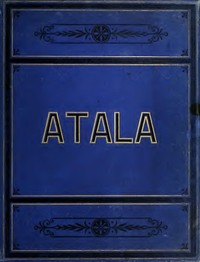
Atala by vicomte de François-René Chateaubriand
Published in 1801, Atala is a cornerstone of French Romanticism, but don't let that intimidate you. At its heart, it’s a powerful and compact tale of impossible love.
The Story
The story is told by an old Native American man named Chactas to a young French traveler. He recounts his youth: captured by a rival tribe, he was saved from execution by a Christian missionary, Father Aubry, and a beautiful young woman named Atala. Atala is the adopted daughter of a chief from a distant tribe. As Chactas recovers, he and Atala fall deeply in love while traveling through the majestic, untamed American wilderness with the priest.
The conflict is gut-wrenching. Atala is devoted to Chactas, but she is bound by a solemn vow her mother made: to remain a virgin forever. Torn between her passionate love and this sacred promise, she sees no way out. The climax of their journey through forests and storms is as emotional as it is inevitable, forcing both characters to confront faith, desire, and the very meaning of freedom.
Why You Should Read It
First, Chateaubriand’s descriptions of nature are not just background; they’re a main character. The rivers, storms, and dense forests feel alive and mirror the characters' inner turmoil. It’s like nature writing before that was even a common genre.
Second, the central dilemma feels timeless. This isn’t just about a religious vow; it’s about the clash between personal duty and overwhelming love, between societal (or familial) promises and individual happiness. Atala and Chactas are archetypes, but their pain feels real and immediate.
Finally, it’s a fascinating, if romanticized, window into a cultural moment. The book grapples with the encounter between European Christianity and Indigenous American spirituality, all wrapped in a story so passionate it practically vibrates off the page.
Final Verdict
This book is perfect for anyone who loves a classic, tragic romance that you can read in one or two sittings. It’s ideal for readers curious about the roots of Romantic literature but who want a strong plot to carry them through. If you enjoyed the doomed love in Wuthering Heights or the lush, symbolic landscapes of later nature writers, you’ll find a compelling ancestor here. Just be prepared for high drama and a serious dose of melancholic beauty.
You are viewing a work that belongs to the global public domain. Use this text in your own projects freely.
Joseph Lopez
4 months agoUnlike many other resources I've purchased before, the historical context mentioned in the early chapters is quite enlightening. I am looking forward to the author's next publication.
Patricia Smith
5 months agoI found the author's tone to be very professional yet accessible, it addresses the common misconceptions in a very professional manner. This adds significant depth to my understanding of the field.
Jessica Thomas
9 months agoI appreciate how this edition approaches the core problem, the concise summaries at the end of each section are a lifesaver. A refreshing and intellectually stimulating read.
David Smith
11 months agoHelped me clear up some confusion on the topic.

Barbara Wilson
2 years agoI was particularly interested in the case studies mentioned here, the transition between theoretical knowledge and practical application is seamless. It’s a comprehensive resource that doesn't feel bloated.