
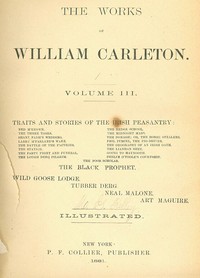
The Black Prophet: A Tale Of Irish Famine by William Carleton
Set in the rain-soaked, desperate landscape of 1840s Ireland, 'The Black Prophet' follows the grim fate of a rural community as the potato crop fails. The story centers on two families, the Daltons and the Nelsons, whose lives are tangled by old grudges and new suffering. When a local man is murdered, suspicion immediately falls on a sinister outsider known as the Black Prophet, a foreboding figure who peddles doom and seems to profit from the famine's despair.
The Story
The plot weaves together this central mystery—who killed the man in the ditch?—with the daily struggle for survival. As hunger tightens its grip, characters are forced to make impossible choices: betray a neighbor for a scrap of food, trust a dangerous stranger, or abandon all moral footing. The investigation into the murder becomes a search for truth in a world where truth is a luxury few can afford. It's a tense, slow-burn narrative where the real enemy isn't just a single killer, but the crushing weight of starvation and a system that seems designed to break the poor.
Why You Should Read It
What stunned me was how immediate it all feels. Carleton wrote this during the Famine, so there's no nostalgic filter. You get the mud, the fever, the awful silence of a starving village. The Black Prophet himself is a fascinating, creepy character—is he a cunning manipulator or a man as trapped by circumstance as everyone else? The book forces you to ask: what do good and evil look like when society is collapsing? It's not a comfortable read, but it's a powerful one that sticks with you.
Final Verdict
Perfect for readers who love historical fiction that doesn't shy away from hard truths, or anyone who appreciates a dark, atmospheric mystery. If you've read works by authors like Thomas Hardy or Émile Zola that examine social injustice, you'll find a similar raw power here. Be prepared—it's bleak. But it's also a vital, unforgettable look at a human catastrophe through the eyes of those who lived it.
This publication is available for unrestricted use. You do not need permission to reproduce this work.
Deborah White
1 year agoNot bad at all.
William Anderson
1 year agoVery interesting perspective.
Ethan Hill
3 months agoI stumbled upon this title and the atmosphere created is totally immersive. Exceeded all my expectations.
Barbara Garcia
1 year agoIt took me a while to process the complex ideas here, but the author’s unique perspective adds a fresh layer to the discussion. Definitely a five-star contribution to the field.