
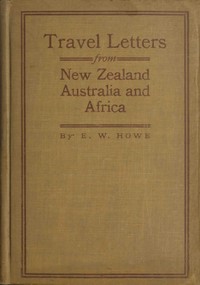
Travel letters from New Zealand, Australia and Africa by E. W. Howe
Picture this: it's the 1880s. A successful but famously cynical Midwestern newspaperman, Edgar Watson Howe, leaves his Kansas home for a year-long voyage across the Pacific. Travel Letters from New Zealand, Australia and Africa is exactly what it sounds like—a series of dispatches he sent back for publication. There's no single plot, but the journey is the story. He sails to Auckland, critiques the young city's ambitions, travels through the sheep stations of New Zealand, crosses to Australia to examine the gold rush boomtowns of Melbourne and the emerging society in Sydney, and finally heads to South Africa, observing the tense political landscape years before the Boer War.
The Story
This isn't a story about heroic adventure. It's a chronicle of observation, annoyance, and unexpected admiration. Howe narrates his experiences with the sharp eye of a journalist. He describes landscapes, but also the price of goods, the quality of roads, and the character of the people he meets—from wealthy ranchers to Chinese immigrants. He's constantly comparing these 'new worlds' to America, and he's not always complimentary. The 'action' is in his candid thoughts: his frustration with bad hotels, his amusement at colonial pretensions, his genuine awe at natural wonders like the Australian bush, and his pointed commentary on imperialism and race relations.
Why You Should Read It
You should read this for the voice. Howe is a brilliant, contrary companion. He cuts through the Victorian-era travel hype. When everyone else was writing flowery prose about the noble savage or the glorious empire, Howe gives you the mud, the flies, the speculative real estate scams, and the sheer hard work of building a nation. His perspective is refreshingly unsentimental. You get history from the ground up—the feel of a place, not just the dates and battles. It makes that era feel real, complicated, and human.
Final Verdict
This book is perfect for armchair travelers with a taste for history and a good dose of sarcasm. If you love primary sources, quirky historical figures, or travel writing that isn't afraid to be a little bit cranky, you'll be captivated. It's not a light, breezy read, but a thoughtful and engaging one. Think of it as the antidote to romanticized history—a compelling, first-hand look at a world in rapid change, told by a man who was determined to see it clearly, flaws and all.
There are no legal restrictions on this material. Use this text in your own projects freely.
Brian Robinson
1 year agoUsed this for my thesis, incredibly useful.
Andrew Wilson
4 months agoI started reading out of curiosity and the flow of the text seems very fluid. Definitely a 5-star read.
Ethan Perez
2 years agoComprehensive and well-researched.




Emily Jones
1 year agoFinally a version with clear text and no errors.