1

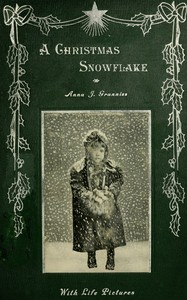
A Christmas snowflake: a rhyme for children — Context and Discussion
(0 User reviews)
527
Project Gutenberg
2023
Not confirmed
American poetry; Christmas poetry
Readers of public-domain and historical texts
Project Gutenberg digital edition
en
Edition facts
Words
4,386
Reading time
20 min
Text sections
3
Before opening A Christmas snowflake: a rhyme for children — Context and Discussion, the edition data offers a quick orientation: 4,386 words, 20 min estimated reading time, and 3 detected text sections.
The text analysis averages about 25.2 words per sentence, while the detected sections provide another way to judge how the source is divided.
Project Gutenberg metadata also associates the work with “American poetry,” connecting these edition facts with the source record’s subject description.
Source:
Project Gutenberg record #69772
In this 1904 children's rhyme, a tearful snowflake persuades two vain flakes to leave the sky and cover the bare ground before Christmas, blending childlike anxiety with a brief nativity reference.
Editorial Edition Score
4.4/5
★★★★★
★★★★★
Calculated from edition completeness, EPUB availability, text structure and catalogue metadata. Not a user rating.
How this score is calculated
- Description quality20 pts
- Title & short description10 pts
- Source metadata20 pts
- Text length15 pts
- Chapters / structure15 pts
- EPUB file integrity20 pts
Total of 100 points, scaled to a 2.5-5.0 range. Editions with an empty description or a missing EPUB file are not scored.
Edition quality
Read the Text
Books by Anna J. Granniss
=SKIPPED STITCHES.= Verses, cloth, 16mo. 50 cents.
=SANDWORT.= Verses, cloth, 16mo. 50 cents.
=SPEEDWELL.= Verses, cloth, 16mo. 50 cents.
(Set complete in box $1.25)
=A CHRISTMAS SNOWFLAKE.= An illustrated rhyme for children. Cloth, 10mo. 50 cents.
ALL BOOKSTORES or ordered of the author Plainville, Conn.
A CHRISTMAS SNOWFLAKE
ILLUSTRATED WITH LIFE PICTURES
HARTFORD, CONN. C. M. GAINES, 66 STATE ST. 1904
COPYRIGHT 1903 BY ANNA J. GRANNISS
_All rights reserved_
To the memory of Mary and Willie The baby sister And the little brother Who went away one Christmas Many years ago
ONE LITTLE FELLOW CRYING OUTRIGHT 1
THE STAR AND THE ANGELS 3
THE SNOWFLAKES COMING DOWN 8-9
GOING TO FIND SANTA 11
SANTA CLAUS SCANNING THE SKIES 15
THE REINDEER AT HOME 18
A CHRISTMAS SNOWFLAKE
A CHRISTMAS SNOWFLAKE
A little white snowflake that lived in the sky, Kept looking down here with a tear in its eye; And wherever it looked, alas, it could see The ground was as bare, and as brown, as could be; And out of the windows, the children’s bright eyes Looked wistfully up, at the gray winter skies, While one little fellow was crying outright, Because the white snowflakes were nowhere in sight, And how could Santa come In his reindeer sleigh, And Christmas now only Just two days away?
It happened just then, that there came dancing by, Two lovely large flakes from somewhere in the sky, And the little flake cried, “Oh, beautiful flakes, I’ve been here looking down, till my very heart aches; See how dismal it looks, down there on the earth. Instead of gay laughter, and shouting, and mirth, The children are crying, their bright eyes are wet, For thinking the snowflakes are going to forget. Will you go down with me sometime before night? The children would see us, and laugh with delight.” “Why you dear little flake Now just dry your eye,” Said the lovely white flakes, “We’ll go down by and by. Just now, we would rather Whirl ’round in the air, Than to settle ourselves Away off down there!” “And just think,” said one, “of my pretty new gown, Being stepped on, and spoiled, and all trodden down!” Then gaily enough they were dancing away, When the brave little flake found courage to say,
“There’s a beautiful Story, so I’ve been told, Very sweet, and tender, And true, and old, About a star,
And the wonderful birth, Long ago, of a Christ-Child On the earth; And now, every year At a certain time
The bells everywhere Ring out their chime, And children gather From near and from far, To sing of that wonderful Child, and the Star.
And oh, beautiful flakes, The time now draws near; But alas, see the earth, How dark and how drear! And on Christmas morning, Why, do you not know, The earth must be covered All over with snow?” Then the little flake said, With a brave bright air, “I’m going to get ready and go down there!”
And then looking down On the dark dreary space, The lovely flakes said, “But in such a big place, Why, whatever could one Tiny snowflake do? Such a wee little Delicate bit like you, You just wait half a minute And we’ll go too!”
So they hurried, and skurried, And flew around, And told every snowflake That could be found; They waltzed ’round in circles, They danced on tip toe, They could not hold still Getting ready to go.
And at last they came Flying, fluttering down, All white in the city, All white in the town. They draped every steeple And tower in sight, They dressed all the trees Against Christmas night, And then covered the ground All over with white.
They hung to the shutters, They clung to the doors, They went with the customers Into the stores. They tapped on the windows And peeped thro’ the pane, Then in a twinkling They vanished again. And they found everywhere, With merry delight, The world getting ready To keep Christmas night.
Now good Mother Snowbank Up there in the sky, Had dropped into a doze As the hours slipped by;
She awoke with a start, And looking around, Not one of her snowflakes Was anywhere found.
She tip toed In here, And she tip toed Out there,
She turned the clouds over With greatest of care, Not a sign of a snowflake Was seen anywhere.
Then she puffed out her cheeks And began to blow; She whistled up high, And she whistled down low; And she blew, till the tree tops Went to and fro.
She whistled and blew Till the air was clear, But the snowflakes pretended They did not hear,
And each nestled down In its chosen retreat, To wait for the click Of the reindeer’s feet.
The poem opens with a snowflake that “kept looking down here with a tear in its eye,” distressed by the brown, bare ground and children’s disappointed faces. The narrative voice immediately establishes a sympathetic, slightly anxious tone, reinforced by the repeated image of children “looking wistfully up at the gray winter skies.” One boy is “crying outright” because snow is needed for Santa’s sleigh—a practical, child-logic motivation that grounds the fantasy in everyday holiday worry.
Granniss uses a brisk, rhyming meter (couplets with occasional triplets) and direct dialogue to animate the flakes. The little flake’s plea is met with vanity from two larger flakes, who fret about their “pretty new gown” being trodden down. This tension between selflessness and self-regard drives the early action, while the narrator’s interjections (“Why you dear little flake”) keep the tone warm and intimate.
Voice and Dialogue as Character Markers
The poem distinguishes its characters almost entirely through speech. The little snowflake speaks in long, earnest lines, its voice full of empathy: “See how dismal it looks, down there on the earth. / Instead of gay laughter, and shouting, and mirth.” In contrast, the two larger flakes speak in short, dismissive bursts. One says, “We’ll go down by and by. / Just now, we would rather / Whirl ’round in the air,” while the other complains about its gown. Their dialogue is peppered with exclamation points and self-centered concerns, creating a clear contrast between the protagonist’s altruism and the companions’ frivolity. The narrator occasionally steps in with a gentle aside (“Now just dry your eye”), softening the flakes’ conflict and guiding the reader’s sympathy.
Pacing Through Repetition and Rhyme
Granniss controls tempo by varying line length and rhyme density. The opening stanzas use longer lines (tetrameter) and couplets that slow the reading, mirroring the snowflake’s anxious waiting. As the larger flakes arrive, the rhythm quickens with shorter lines and internal rhymes: “Then gaily enough they were dancing away.” The poem also repeats key phrases—“looking wistfully up,” “gray winter skies,” “by and by”—to build a refrain-like structure that reinforces the waiting motif. The shift to the nativity story is introduced with a deliberate pause: “There’s a beautiful Story, so I’ve been told, / Very sweet, and tender, / And true, and old.” The broken line and triple adjectives signal a change in pace, moving from playful dialogue to a hushed, reverent tone.
Setting and Visual Contrasts
The poem’s setting is defined by stark visual oppositions: the gray sky versus the brown earth, the children’s wet eyes versus the hoped-for white snow. Granniss repeatedly emphasizes the absence of snow—the ground is “bare” and “brown,” the skies “gray”—to heighten the need for the flakes’ descent. The illustrations listed in the front matter (e.g., “The snowflakes coming down,” “Mother Snowbank,” “Santa Claus scanning the skies”) suggest that the visual contrasts were integral to the original 1904 edition. The text itself uses color sparingly but effectively: the “lovely large flakes” are described as “beautiful,” and the little flake’s tear is a recurring motif. This limited palette focuses attention on the emotional state of the characters rather than on elaborate scenery.
Readers may notice how Granniss balances a child’s concrete worry (no snow for Santa’s sleigh) with a gentle moral about generosity. The poem’s brevity—around 4,400 words—and its reliance on dialogue make it suitable for reading aloud, with opportunities for different voices. Pay attention to the moments when the narrator steps in: those asides often carry the emotional weight, especially in the transition to the nativity story. The incomplete excerpt leaves the resolution unclear, but the poem’s structure suggests a movement from anxiety to reassurance, driven by the little flake’s persistence.
That snowflake's quiet plea to cover the bare ground still lingers with me, the way childhood worries do. It makes me think of The Fairy Green — Background and Themes, where similar tender anxieties seem to find their own gentle resting place. There’s something achingly familiar in how these old verses hold that fleeting, unspoken ache.
There are no reviews for this eBook.
There are no comments for this eBook.
Reader reflection
How will you remember this book?
Save your reaction, strongest insight, and memorable passage.
Your progress
0
/
10
2
What was your overall reaction to the book?
3
Would you pass this book on to a friend?
4
How easy was the book to follow?
5
Would you like to discuss this book with someone?
6
Which part made the strongest impression?
7
Did you relate to its people, ideas, or situations?
8
Did the book meet your expectations?
9
What is the main idea you are taking away?
10