
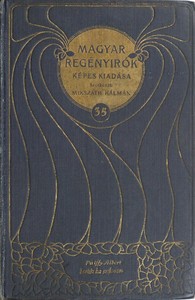
Esztike kisasszony professzora: Regény by Albert Pálffy
Let me set the scene for you. We're in the Hungary of the 1800s, a place of strict manners and even stricter ideas about what women should and shouldn't do. Enter Esztike, a bright and curious young woman from a good family. Her family hires a professor, an older gentleman set in his scholarly ways, to give her a proper education. On the surface, it's a simple arrangement. But this isn't just a story about grammar and history lessons.
The Story
The real story begins in the space between those formal lessons. The professor arrives with his dusty textbooks and firm opinions, ready to shape a young mind. But Esztike isn't a blank slate. She has her own thoughts, her own observations about the world, and a quiet confidence that slowly starts to unravel the professor's certainty. Their relationship becomes a gentle tug-of-war. He tries to teach her the 'right' way to see things—the way society says they should be seen. She, often without even trying, shows him there might be another way. The heart of the book isn't in big dramatic events, but in these small, charged conversations. You watch as respect grudgingly grows, assumptions are challenged, and something much deeper than a teacher-student bond begins to form, all within the tightly controlled drawing rooms of the era.
Why You Should Read It
What I loved most was how real the characters felt. Esztike isn't a loud rebel; she's clever and uses the tools she has—her wit, her questions, her quiet persistence. The professor's journey is just as compelling. Watching this educated man realize how much he still has to learn, especially from someone society told him was beneath his instruction, is wonderfully satisfying. The book is a quiet champion for the power of curiosity over dogma. It makes you think about all the times we judge someone's potential before we even know them.
Final Verdict
This is a perfect pick for anyone who loves character-driven historical fiction. If you enjoy stories about intelligent women navigating a restrictive society, like the works of Jane Austen, but with a Central European flavor, you'll feel right at home. It's also a great find for readers curious about 19th-century life beyond Western Europe. Don't go in expecting sword fights or political intrigue. Go in for the pleasure of a slow-burn, smart conversation between two great characters, and the gentle satisfaction of watching old walls come down, one polite challenge at a time.
You are viewing a work that belongs to the global public domain. It serves as a testament to our shared literary heritage.
Matthew White
7 months agoI was particularly interested in the case studies mentioned here, the author clearly has a deep mastery of the subject matter. A solid investment for anyone's personal development.
George Perez
1 year agoThe clarity of the introduction set high expectations, and the data points used to support the main thesis are quite robust. I'm genuinely impressed by the quality of this digital edition.
Sarah Lee
6 months agoGiven the current trends in this field, the clarity of the writing makes even the most dense sections readable. This has become my go-to guide for this specific topic.
Thomas Miller
2 months agoThe layout is perfect for tablet and e-reader devices.



David Wilson
4 months agoFrom a researcher's perspective, the cross-referencing of different chapters makes it a great study tool. A refreshing and intellectually stimulating read.