
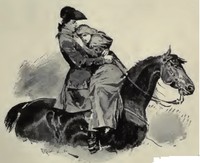
The red cockade by Stanley John Weyman
Stanley J. Weyman was a master of the historical adventure novel, and 'The Red Cockade' is a fantastic example of why. Published in 1895, it captures the thrill and danger of a bygone era with a pace that still feels fresh today.
The Story
The story follows Martin, a French country squire who would rather tend his estate than get involved in politics. But when the French Revolution erupts, neutrality becomes impossible. The 'red cockade'—a revolutionary ribbon—becomes the symbol of the new, violent order. After a clash with revolutionary soldiers, Martin is forced to flee. His journey turns into a desperate odyssey across a fractured France. He encounters friends and foes in equal measure, navigates secret loyalties, and gets caught in a plot to rescue a royalist family from the guillotine. It's a novel of narrow escapes, hidden identities, and constant peril, where every conversation could be a trap and safety is always temporary.
Why You Should Read It
What makes this book so engaging is Martin himself. He's not a superhuman swashbuckler. He's clever, often scared, and motivated by simple decency more than grand ideology. Weyman puts you right beside him, making the historical setting feel incredibly immediate. You smell the crowded Paris streets, feel the tension in a guarded inn, and understand the paralyzing fear of the mob. The history isn't just a backdrop; it's the engine of the plot. The novel brilliantly shows how grand historical forces crash down on ordinary lives, forcing impossible choices.
Final Verdict
'The Red Cockade' is perfect for anyone who loves a good, old-fashioned adventure story with heart and brains. It's for readers who enjoy the historical tension of books like The Scarlet Pimpernel but want a grittier, more ground-level view. If you think history is boring, this novel will change your mind—it's all pulse-pounding action and human drama. A truly satisfying escape into a world where every day is a fight for survival.
The copyright for this book has expired, making it public property. It serves as a testament to our shared literary heritage.




Susan Brown
6 months agoThe information is current and very relevant to today's needs.