
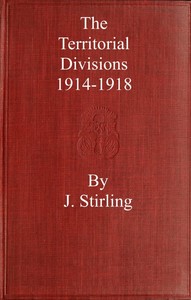
The Territorial Divisions, 1914-1918 by John Stirling
Most history books about the First World War start with an assassination and end with a treaty. John Stirling's The Territorial Divisions, 1914-1918 starts where others stop: with the bewildering aftermath. The core of the book isn't the battlefield, but the conference room and the cartographer's desk.
The Story
The book traces the fate of Europe's borderlands from the war's first month to the final strokes of the post-war treaties. Stirling shows how the initial, frantic carving-up of territory by invading armies set patterns that would harden into new nations. He follows specific regions—places like Alsace-Lorraine, Silesia, and chunks of the former Ottoman Empire—through the eyes of local officials, confused citizens, and the often-clueless diplomats drawing new lines. The 'plot' is the slow, grinding process of turning fluid war zones into fixed countries, and the human chaos that resulted. It's the story of villages split in two, families stranded on the wrong side of a new river border, and the birth of tensions we still see today.
Why You Should Read It
This book stuck with me because it makes history feel immediate and strangely personal. By focusing on the 'how' of map-making, Stirling exposes the sheer randomness and political horse-trading that decided the futures of millions. You get a real sense of the disconnect between the men in Paris drawing straight lines on maps and the people living on that land. It reframes the entire war not just as a military conflict, but as the moment the modern world's political skeleton was assembled, often clumsily. The most powerful sections are the personal accounts—letters and diaries from people who literally didn't know what country they were in from one year to the next.
Final Verdict
Perfect for history buffs who think they know WWI, but are ready to see it from a fresh, ground-level angle. It's also great for anyone interested in politics, geography, or why the world looks the way it does. If you enjoy books that connect big political decisions to everyday human stories, you'll love this. Fair warning: it might ruin maps for you—you'll never look at a border the same way again.
This masterpiece is free from copyright limitations. Distribute this work to help spread literacy.
Thomas Jackson
1 year agoA bit long but worth it.
Brian Sanchez
1 year agoGood quality content.
Margaret Jones
7 months agoHonestly, the character development leaves a lasting impact. I will read more from this author.
Ethan Young
1 year agoA bit long but worth it.
Patricia Johnson
11 months agoThanks for the recommendation.