1

A Christmas prayer — Edition Insights
(0 User reviews)
101
Project Gutenberg
2024
Not confirmed
Christmas poetry; Prayer -- Poetry
Readers of public-domain and historical texts
Project Gutenberg digital edition
en
Edition facts
Words
3,440
Reading time
15 min
Text sections
6
For A Christmas prayer — Edition Insights, the stored edition analysis reports 3,440 words, 15 min estimated reading time, and 6 detected text sections.
The text analysis averages about 25.5 words per sentence, while the detected sections provide another way to judge how the source is divided.
Project Gutenberg metadata also associates the work with “Christmas poetry,” connecting these edition facts with the source record’s subject description.
Source:
Project Gutenberg record #72742
A 1915 Christmas poem by James W. Foley, structured as a series of petitions for friends who may be weeping, straying, grieving, or far from home, framed by the imagery of Yule-logs and olden, golden friends.
Editorial Edition Score
4.5/5
★★★★★
★★★★★
Calculated from edition completeness, EPUB availability, text structure and catalogue metadata. Not a user rating.
How this score is calculated
- Description quality20 pts
- Title & short description10 pts
- Source metadata20 pts
- Text length15 pts
- Chapters / structure15 pts
- EPUB file integrity20 pts
Total of 100 points, scaled to a 2.5-5.0 range. Editions with an empty description or a missing EPUB file are not scored.
Edition quality
Read the Text
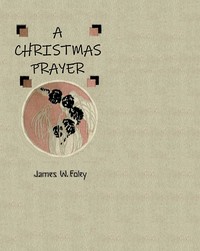
Published by P. F. VOLLAND & CO. NEW YORK CHICAGO TORONTO COPYRIGHT 1918, P. F. VOLLAND & CO.
Dear Lord, these friends of mine, where they may stray, Wilt Thou bear each Thy blessing on this day? For now the season comes when Yule-logs burn, When hearts grow kind, and sweeter dreamings turn Unto these olden, golden friends. I pray Thy benediction on them all this day, And let Thy light of love and mercy shine, Dear Lord, this day, on all these friends of mine!
Dear Lord, if any weep, wilt Thou be kind? If any stray in error, wilt Thou find The way for them and bring them back to Thee With gifts of Thy rare love and sympathy? If any grieve, wilt Thou not bring them cheer, This day, another day and all the year? Break them the bread of love and pour the wine Of sympathy for all these friends of mine!
Dear Lord, if some be far from home this day, If some be wanderers upon the way, If some shall be in tears, and some shall cry With bitter pain, wilt Thou not pass me by And minister to them with tender care, And what of joy or gladness be my share Wilt thou not give to them? Be Thy divine And glorious peace upon these friends of mine!
Dear Lord, if some be rich, bid Thou them bear Some joy this day to Sorrow and to Care. If some be glad with living, bid them go Afar or near and minister to Woe. Bring love to every heart and let it fill The cup of joy for each, and overspill, And let the light of sympathy so shine That none shall weep of all these friends of mine.
So now when hearts grow kind and Yule-logs burn, When thoughts grow gentler, sweeter, and return To olden, golden friends, or far or near, This prayer of mine be hallowed with a tear Welled from the fount of love and sympathy, And sent upon the wintry night to Thee, Till all the world is warmed with love divine,---- Dear Lord, bless all these olden friends of mine!
James W. Foley's A Christmas Prayer (1915) is a poem built entirely as a series of direct addresses to God on behalf of unnamed friends. The speaker's petitions unfold in five stanzas, each beginning with the repeated invocation "Dear Lord" and a conditional clause—"if any weep," "if some be far from home," "if some be rich." This structure creates a litany-like rhythm, moving through specific human sorrows and joys. The poem's setting is evoked through the recurring image of "Yule-logs burn[ing]" and the phrase "olden, golden friends," which appears in both the opening and closing stanzas, giving the work a circular shape. Readers should note how the speaker's own role shifts: in the third stanza, he asks to be passed by so that comfort may reach those in pain, while in the final stanza, his prayer is "hallowed with a tear."
The Litany of Petitions
The poem's five stanzas each present a distinct petition, creating a cumulative effect. The first stanza asks for blessing on all friends, using the image of light: "let Thy light of love and mercy shine." The second addresses those who weep, stray, or grieve, requesting that God "bring them back" and "break them the bread of love." The third stanza turns to those far from home, wanderers, or in tears, with the speaker asking to be set aside so that others may receive care. The fourth stanza addresses the rich, bidding them "bear some joy this day to Sorrow and to Care," and the glad to "minister to Woe." The final stanza returns to the opening image of Yule-logs and olden friends, sealing the prayer with a tear. This progression from general blessing to specific needs—and back to a communal close—gives the poem a deliberate, almost liturgical structure.
Recurring Words and Images
Foley relies on a small set of repeated words and images to unify the poem. The phrase "olden, golden friends" appears twice (stanzas 1 and 5), framing the work. "Yule-logs burn" also appears in both the first and last stanzas, reinforcing the winter setting. The word "sympathy" occurs three times: in stanza 2 ("gifts of Thy rare love and sympathy"), stanza 4 ("let the light of sympathy so shine"), and the final stanza ("the fount of love and sympathy"). The pairing of "love" and "sympathy" recurs throughout, as do the verbs "bear" and "bring." The poem's vocabulary is deliberately simple and repetitive, which suits its prayer-like tone. Readers may notice how the speaker's own emotional state is hinted at only in the closing lines, where the prayer is "hallowed with a tear."
The Speaker's Position and Humility
Throughout the poem, the speaker positions himself as an intermediary who asks not for himself but for others. In the third stanza, he explicitly requests: "wilt Thou not pass me by / And minister to them with tender care." This self-effacing gesture is striking—the speaker asks to be overlooked so that others may receive comfort. Similarly, in the fourth stanza, he asks that whatever joy or gladness is his share be given to others. The final stanza introduces a personal note: the prayer is "hallowed with a tear / Welled from the fount of love and sympathy." This tear is the only direct expression of the speaker's own emotion, and it comes at the very end. The poem thus balances a collective focus on friends with a single, quiet revelation of the speaker's own feeling.
Structure and Rhyme as a Reading Guide
The poem's formal features can help orient a first reading. Each stanza follows an aabbccdd rhyme scheme, with the final couplet in every stanza ending in "divine"/"mine" or a close variant. The meter is iambic pentameter, giving the lines a steady, meditative rhythm. The repeated opening "Dear Lord" and the conditional "if" clauses create a pattern that readers can anticipate. The poem's brevity—five stanzas of eight lines each—means that each stanza carries weight. Noticing how the final stanza echoes the first (both mention Yule-logs and olden friends) reveals the poem's circular structure. The closing line, "Dear Lord, bless all these olden friends of mine!," mirrors the first stanza's request, but now the prayer has been "hallowed with a tear," suggesting a deepened emotional resonance.
The Role of the Reader
Because the poem is a prayer addressed to God, the reader occupies the position of an overhearer rather than a direct addressee. This creates a sense of intimacy and distance simultaneously. The repeated use of "these friends of mine" leaves the friends unnamed and unspecified, inviting readers to project their own relationships onto the poem. The conditional structure—"if any weep," "if some be far from home"—acknowledges a range of possible human experiences without specifying which apply. This openness allows the poem to function as a general prayer that can be adapted by any reader. The final image of the prayer being "sent upon the wintry night to Thee" reinforces the sense of a private, heartfelt communication that the reader is privileged to witness.
Readers approaching A Christmas Prayer for the first time may find it helpful to read the poem aloud, noting the rhythm of the iambic lines and the repetition of key phrases. The poem's structure—a series of conditional petitions framed by the image of Yule-logs—rewards attention to how the speaker's role shifts from intercessor to one who offers his own tear. Because the poem is short, it can be read in a single sitting, but its layered repetitions and circular form invite multiple readings. Consider how the poem's 1915 publication date might inform its tone of earnest, unadorned devotion.
There’s something about Foley’s 1915 poem that lingers, those petitions for friends who are weeping or far from home—like holding a worn photograph of people we once knew. It made me think of Little people — Key Ideas to Explore, and how the smallest hands we’ve held leave the longest shadows. Olden, golden friends, indeed. I still wonder where some of mine are.
There are no reviews for this eBook.
There are no comments for this eBook.
Reader reflection
How did this book work for you?
Your answers remain private and are stored only in this browser.
Your progress
0
/
10
2
How did the book work for you overall?
3
Would you pass this book on to a friend?
4
How easy was the book to follow?
5
How well did it match your expectations?
6
Did the story or argument move comfortably?
7
Do you expect to return to this book?
8
How useful were the ideas in this book?
9
What did this book teach you most?
10