
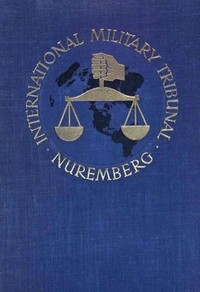
Trial of the Major War Criminals Before the International Military Tribunal,…
This isn't a book with a plot in the traditional sense. It's the official record of the International Military Tribunal that took place in Nuremberg, Germany, from 1945 to 1946. The "story" is the trial itself. After World War II, the Allied powers—the United States, Great Britain, France, and the Soviet Union—decided to put the surviving leaders of Nazi Germany on trial for crimes against peace, war crimes, and crimes against humanity. This was unprecedented. The defendants weren't soldiers captured on a battlefield; they were the architects of a regime that industrialized murder.
The Story
The book follows the trial day by day. You get the opening statements, the presentation of mountains of evidence (often seized Nazi documents that damned them with their own words), the testimonies, the cross-examinations, and the final judgments. The defendants, including figures like Hermann Göring and Rudolf Hess, offer their defenses. Some claim ignorance, others say they were just following orders, and a few remain defiant. The prosecution methodically builds its case, showing the deliberate planning and execution of aggression and genocide. The climax is the delivery of the verdicts: some receive death sentences, others prison terms.
Why You Should Read It
Reading this is a profoundly human experience, despite the dry, legal format. The power isn't in dramatic narration; it's in the stark reality of the words spoken. You feel the weight of history in every objection and ruling. It shows justice as a messy, human process—flawed, argumentative, but desperately trying to establish a new standard for the world. It forces you to look directly at the banality of evil, as these men in suits debated the fate of millions. It's unsettling to see how ordinary some of their excuses sound, which is perhaps the most important lesson of all.
Final Verdict
This is not for casual bedtime reading. It's for anyone who wants to go beyond the headlines and documentaries to understand the foundational moment of modern international law and human rights. It's perfect for history buffs, students of law or political science, and readers who aren't afraid of challenging, primary-source material. If you believe in the principle that "those who cannot remember the past are condemned to repeat it," this is one of the most vital records of that past we have. Be prepared—it will stay with you.
This masterpiece is free from copyright limitations. Feel free to use it for personal or commercial purposes.
Emma Jones
1 year agoEssential reading for students of this field.
David Lopez
2 years agoI stumbled upon this title and it challenges the reader's perspective in an intellectual way. Don't hesitate to start reading.
Ethan Taylor
1 year agoComprehensive and well-researched.
Matthew Hill
8 months agoIf you enjoy this genre, it challenges the reader's perspective in an intellectual way. One of the best books I've read this year.
Margaret Lopez
9 months agoHigh quality edition, very readable.