1

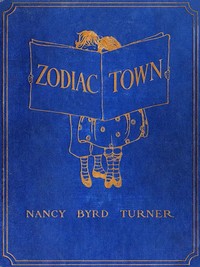
Zodiac Town — Background and Themes
(0 User reviews)
873
Project Gutenberg
2007
Not confirmed
Children's poetry; Months -- Juvenile poetry; Poetry -- Juvenile fiction
Readers of public-domain and historical texts
Project Gutenberg digital edition
en
Edition facts
Words
15,228
Reading time
67 min
Text sections
5
The source record for Zodiac Town — Background and Themes measures this digital text at 15,228 words, 1 hr 7 min estimated reading time, and 5 detected text sections.
The text analysis averages about 18.3 words per sentence, while the detected sections provide another way to judge how the source is divided.
Project Gutenberg metadata also associates the work with “Children's poetry,” connecting these edition facts with the source record’s subject description.
Source:
Project Gutenberg record #24011
In this 1921 children's verse collection, Amos and Ann escape a tedious poem and meet the Journeying Man, who leads them through twelve monthly houses. Each stop blends whimsical rhymes with calendar lore, from a January house of snow to a zoo-like August abode where animals talk and a parrot runs a school.
Editorial Edition Score
4.6/5
★★★★★
★★★★★
Calculated from edition completeness, EPUB availability, text structure and catalogue metadata. Not a user rating.
How this score is calculated
- Description quality20 pts
- Title & short description10 pts
- Source metadata20 pts
- Text length15 pts
- Chapters / structure15 pts
- EPUB file integrity20 pts
Total of 100 points, scaled to a 2.5-5.0 range. Editions with an empty description or a missing EPUB file are not scored.
Edition quality
Read the Text
Ann was sure 'twas a waste of time To bother a child with jingling rhyme. Amos said, "What's the sense in rhythm-- Feet and lines?" He had finished with 'em!
They peered at the poem with scowly faces, And yawned and stumbled and lost their places. Then--a breeze romped by, and a bluebird sang, And they shut the book with a snap and a bang; Shut the book and were off and away, Away on flying feet;-- Never did squirrels move more light, Or rabbits run more fleet!
Over a wall and down a lane And through a field they ran; And "Where shall we go?" said Amos. "Oh, And where shall we stop?" cried Ann. Then all at once, round the curve of a hill, They pulled up panting and stood stock-still;
For there, by the edge of a ripplety brook, In a deep little, steep little place, Sat a long-legged youth, with a staff and a book And a quaint, very quizzical face. His cap and his trousers were dusty green And his jacket was rusty brown, And he whittled away on sweet white wood, With shavings showering down. He whittled away 'twixt a laugh and a tune, With fingers as light as thistles.
"And what are you making?" asked Amos and Ann.
He said, "I am making whistles." He finished one with a notch and a slit, And threw back his head and blew on it.
The whistle sang like a bird when he blew, Then he twinkled and put it down. "And where are you going," he said, "you two? _Are you going to Zodiac Town_?"
Each of them shook a doubtful head (For truly they didn't know).
"But make us a whistle like yours," they said, "And anywhere we will go!"
"I'll make you a whistle apiece," quoth he, "And if you like, you may follow me; Zodiac Town's in the land of Time, And I go by the road of Rhyme."
Ann looked at Amos and Amos at Ann; They blinked with sheer surprise; And then they looked at the long-legged man, Who twinkled back with his eyes. They said (and their voices were meek and low), "We ran away from a rhyme, you know."
"You did?" cried the fellow in green and brown. "Then it's unmistakably plain, oho, That you're due in Zodiac Town!"
He took up his book and shouldered his staff, And turned to Amos and Ann. "Call me J. M.," he said with a laugh. "That stands for Journeying Man. I'll make you some whistles along the way, While you are remembering rhymes to say; For more than once in the land of Time You will have to speak in rhyme."
"Our names," said the children, "are Amos and Ann; And poetry is rather hard for us, But we'll do the best we can."
Then they went away with the young-faced man, Joyfully up and down, Talking in rhyme by hill and lea, Gayly in rhyme--for that, said he, Was the tongue of Zodiac Town. To Zodiac after a while they came-- The twistiest, mistiest town, With odd little collopy, scallopy streets Meandering up and down. The home of the years and the hours was there, Of the minutes, the months, and the days-- Houses with windows that winked and smiled, And doors with sociable ways; And leaves and apples and chestnuts brown Came pattering down, came clattering down, And stairways wound to the top of a hill That a person could climb if he had the will-- That a person could climb, then start at the top, And bumpeting down and thumpeting down, Go zip! to the bottom with never a stop.
"_Whoopee!_" cried Amos--and off and away, Quick with a kick, like a clown, He ran to the top of the highest stair, Ann at his heels--And zip! the pair Came bumpeting down and thumpeting down.
Then, "Come, you two," said the Journeying Man, "We have twelve calls to pay. We'll visit the months this time, if we can. Now listen to me: at every house Many clocks will be ticking away: Grandfather clocks and cuckoo clocks And moon-faced clocks on shelves, Clocks with alarms and eight-day clocks, All talking low to themselves; Little gilt clocks and clocks with chimes, And all of them keeping different times. And any minute of any hour (You never did see their like), Evening or morning, with never a warning, One of the lot will strike. And you _may_ be talking your everyday talk, But the instant the hour shall chime, Quick as a flash you must stop, and dash Right into a rollicking rhyme!"
"What kind of a rhyme?" gasped Amos and Ann. "What kind of a rhyme, J. M.?"
Amos and Ann begin by rejecting a poem they find tedious—"'Twere better to go and play"—and their flight from the page leads them to a long-legged youth with a staff and book, the Journeying Man. He guides them through twelve houses, one for each month, where the abstract calendar becomes a series of concrete, often surprising settings. The January house is built of snow; the March house, strangely, is built in a tree. Each stop pairs a month with a zodiac sign (e.g., August with Virgo) and offers a short verse that plays with the month's character.
The excerpts show a pattern: the children arrive, observe the oddity of the place, and are prompted to recite or hear a rhyme. The Journeying Man rarely explains; instead, he lets the houses and their inhabitants speak for themselves. The August house, for instance, is "like a zoo" with talking animals, and a parrot claims to have taught them speech. The verses within the verses—like Amos's impromptu poem about a trout—echo the frame story's own playful attitude toward rhyme and learning.
The Frame as a Rejection and Embrace of Poetry
The opening scene sets up a tension between forced learning and spontaneous discovery. Amos and Ann "shut the book with a snap and a bang" and run outdoors, only to encounter a figure who embodies both instruction and play: the Journeying Man whittles wood while humming, and his first act is to lead them into a poem—the twelve houses. The children's initial complaint about "jingling rhyme" is answered not by argument but by immersion in a world where rhyme is the natural mode of communication. The animals in August speak in verse, and Amos himself composes a poem on the spot about a trout. The frame thus suggests that poetry is not a chore to be memorized but a living, social activity that arises from curiosity and encounter.
The Journeying Man: Guide, Teacher, or Trickster?
The Journeying Man is described with a "quaint, very quizzical face" and dusty green clothes, and he carries a staff and a book. He does not lecture; he points and lets the children observe. When Amos asks how the animals learned to talk, the Journeying Man deflects with a long, humorous poem about animals in school—"The birds and beasts don't go to school; I guess 't would make them mad to"—and then lets a parrot answer the question directly. His role is less that of a teacher than of a catalyst: he creates situations where the children must engage, recite, and think. The parrot's school, which is "not a school" by name, mirrors the Journeying Man's own method: learning happens through performance and play, not through desks and discipline.
The Houses as Embodied Months
Each month is given a physical form that exaggerates its conventional attributes. The January house is made of snow; the March house is built in a tree, suggesting the windiness of early spring; the April house is near a pond, evoking rain and growth. The August house is "like a zoo," with animals that roam freely and greet the visitors. The illustrations listed in the contents—"The June house wasn't a house at all"—hint at further surprises. These settings are not merely decorative; they are the medium through which the children experience the passage of time. The Journeying Man does not explain the months; he shows them. The reader, like Amos and Ann, must infer the connection between the physical oddity and the month's character, making the poem a puzzle as well as a story.
The excerpts offer only a partial view of the twelve houses, but the pattern is clear: each month is a riddle wrapped in a rhyme. Readers might pay attention to how the Journeying Man's own verses—like the animal-school poem—differ in tone from the children's recitations, and how the zodiac signs (listed in the table of contents) relate to the houses' designs. The book rewards attention to its small details: the cuckoo that interrupts Amos, the raccoon that laughs too loud, the parrot's insistence on polite cats. These are not random; they are the texture of a world where learning and laughter are inseparable.
That rainy afternoon, Zodiac Town felt less like reading and more like wandering—each month’s house a small, strange refuge. I kept thinking about how Amos and Ann trusted the Journeying Man without knowing where he’d take them. Later, that trust lingered, and it gently led me to The End of Elfintown — Key Ideas to Explore, where a similar uncertainty shadows the path home.
There are no reviews for this eBook.
There are no comments for this eBook.
Reader reflection
What was your reading experience?
Capture what you thought, learned, and would like to remember.
Your progress
0
/
10
2
How did the book work for you overall?
3
How likely are you to recommend this book?
4
How easy was the book to follow?
5
Would this book work well in a reading group?
6
How clear did the writing feel?
7
Did anything about the book feel genuinely new?
8
Could you apply anything you learned?
9
In one sentence, what did you learn?
10