
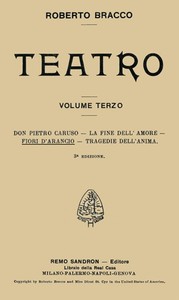
Fiori d'arancio by Roberto Bracco
Roberto Bracco's Fiori d'arancio is a one-act play that feels like peeking through a keyhole into a drawing room in 19th-century Italy. The title, meaning 'Orange Blossoms,' is the traditional symbol for a wedding, which immediately sets the scene.
The Story
The plot is simple but loaded. A young woman, Anna, has just accepted a marriage proposal from Count Roberto. The play opens in the immediate, slightly giddy aftermath. Her family is thrilled—it's a brilliant match on paper. But as the reality of the engagement settles in, Anna starts to wobble. Through conversations with her sister, her mother, and the Count himself, we see her doubts creep in. Is she marrying for love, for security, or just because it's the next expected step in her life? The Count is kind and respectable, but is that enough? The central drama isn't a loud argument; it's the quiet, growing panic in Anna's eyes as the wedding machinery starts up around her.
Why You Should Read It
What grabbed me was how current Bracco's observations feel. He writes women who are smart and self-aware, trapped in a system that values their compliance over their happiness. Anna's internal conflict is so relatable. You can feel her trying to talk herself into being happy. Her mother represents the old guard, focused entirely on social standing. Her sister offers a slightly more modern, but still limited, perspective. Bracco doesn't give us easy answers or a dramatic runaway bride scene. Instead, he masterfully builds tension through everyday talk, making you wonder with every line: Will she go through with it? And if she does, what part of herself will she leave behind?
Final Verdict
This is a perfect quick read for anyone who loves character-driven stories or is curious about the social pressures of a different time. If you enjoy authors like Edith Wharton, who also examined the cost of social conventions, you'll appreciate Bracco's sharp eye. It's also great for theater fans—you can easily imagine the staging and the actors' subtle expressions. Don't expect sweeping action; instead, get ready for a thoughtful, sometimes painfully honest, look at a moment of personal choice. A little classic that asks a big question: How much should we compromise for a 'good' life?
This publication is available for unrestricted use. Thank you for supporting open literature.
Joseph Moore
8 months agoLooking at the bibliography alone, the transition between theoretical knowledge and practical application is seamless. The price-to-value ratio here is simply unbeatable.
Susan Williams
8 months agoEnjoyed every page.
Charles Torres
1 year agoFive stars!
Emma Sanchez
1 year agoEnjoyed every page.




Susan Lee
7 months agoI particularly value the technical accuracy maintained throughout.