
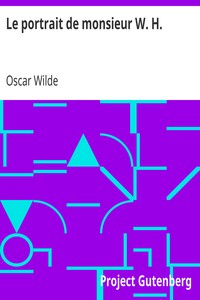
Le portrait de monsieur W. H. by Oscar Wilde
Let me set the scene for you. A man named Erskine tells his friend a strange story about a past acquaintance, Cyril Graham. Graham was convinced he’d solved literature’s greatest cold case: the identity of the ‘Mr. W.H.’ to whom Shakespeare dedicated his sonnets. His proof? A portrait of a beautiful young man, labeled as Mr. W.H. Graham’s theory is elegant, passionate, and completely built on this one piece of art. When others demand more evidence, Graham’s obsession takes a dark and final turn, leaving Erskine with the portrait and a haunting legacy of belief.
The Story
The story unfolds as this tale is passed from Erskine to our narrator. Intrigued, the narrator falls headfirst into the mystery, studying the portrait and the sonnets until he, too, becomes a true believer in Graham’s theory. He races to convince Erskine, hoping to validate the friend who died for this idea. But here’s Wilde’s genius twist: the story becomes less about proving a historical fact and more about the seductive power of the story itself. The narrator’s conviction is so powerful it reignites Erskine’s faith, leading to another tragic act of devotion. In the end, we’re left with a stunning revelation about the portrait that changes everything, forcing us to ask: does it matter if it’s real, if the belief felt so utterly true?
Why You Should Read It
This isn’t a dry historical essay. It’s a gripping character study about obsession. Wilde shows us how a clever idea can become a religion, and how we can convince ourselves of anything if it’s beautiful enough. The conversations are sparkling, full of the witty, paradoxical dialogue Wilde is famous for, but there’s a deep, unsettling darkness underneath. It explores how art isn’t just something we look at; it’s something that can look back, challenge us, and even consume us. The real mystery isn't Mr. W.H.'s identity, but why we need him to be someone so badly.
Final Verdict
This book is perfect for anyone who loves a brainy mystery that doesn’t have a neat solution. It’s for readers who enjoy stories about ideas as much as action, and for fans of Wilde who want to see his playful wit applied to a genuinely suspenseful plot. If you’ve ever fallen down a rabbit hole of research or argued passionately about a fan theory, you’ll see yourself in these pages. It’s a quick, potent read that lingers, making you question the line between a scholar’s dedication and a fanatic’s obsession long after you finish the last page.
This book is widely considered to be in the public domain. Knowledge should be free and accessible.
Jennifer Thomas
8 months agoMy first impression was quite positive because the way it handles controversial points with balance is quite professional. A solid investment for anyone's personal development.
Karen Johnson
6 months agoUnlike many other resources I've purchased before, it addresses the common misconceptions in a very professional manner. If you want to master this topic, start right here.

Jennifer Jones
11 months agoThe clarity of the introduction set high expectations, and the structural organization allows for quick referencing of key points. Finally, a source that prioritizes accuracy over hype.