1

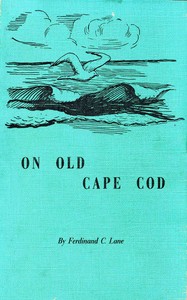
On old Cape Cod — Themes and Context
(0 User reviews)
107
Project Gutenberg
2025
Not confirmed
American poetry -- 20th century; Cape Cod (Mass.) -- Poetry
Readers of public-domain and historical texts
Project Gutenberg digital edition
en
Edition facts
Words
22,645
Reading time
99 min
Text sections
85
Before opening On old Cape Cod — Themes and Context, the edition data offers a quick orientation: 22,645 words, 1 hr 39 min estimated reading time, and 85 detected text sections.
The text analysis averages about 26.2 words per sentence, while the detected sections provide another way to judge how the source is divided.
Project Gutenberg metadata also associates the work with “American poetry -- 20th century,” connecting these edition facts with the source record’s subject description.
Source:
Project Gutenberg record #76602
Ferdinand C. Lane's 1961 poetry collection uses the landscapes, seascapes, and seasonal rhythms of Cape Cod as a structural framework, moving from Monomoy's skeletal sandbars to inland marshes, with recurring images of harvest, drift, and dissolution.
Editorial Edition Score
4.8/5
★★★★★
★★★★★
Calculated from edition completeness, EPUB availability, text structure and catalogue metadata. Not a user rating.
How this score is calculated
- Description quality20 pts
- Title & short description10 pts
- Source metadata20 pts
- Text length15 pts
- Chapters / structure15 pts
- EPUB file integrity20 pts
Total of 100 points, scaled to a 2.5-5.0 range. Editions with an empty description or a missing EPUB file are not scored.
Edition quality
Read the Text
or, Beach sand fluttered like withered leaves And sifted under the door.
The salt that crusted the chimney wide Had tinged the flames with yellows and reds; Salt were the wavelets that lapped outside, And white as the salt were their heads.
Visions of many a tropic clime In the firelight seemed to come and go; Till friends they had known in their youthful prime Took form in the radiant glow.
As time cracked voices droned away Through strange adventures in days gone by, One voyaged with them to far Cathay And spice swept Araby.
Quaint were the islands they knew so well Zanzibar, Pitcairn, and Celebes; Isles enchanted where reigned the spell Of other and lonelier seas.
Seas that cringed at the typhoon’s wrath When his thunderous roar was heard; Silent seas in the calm of death Where never a whisper stirred.
And the pulses quickened to hear their tales of voices hailing from spectral sands; Of dead men’s ships with their ghastly sails Unfurled by skeleton hands!
Legends weird of an unplumbed deep Where galleons foundered in days of yore; And sightless monsters that grope and creep In the slime of the ocean floor.
Sagas of shipwreck in days long gone, Of pirate treasure and revelry, Of clashing cutlass and fights hard won In some blood stained mutiny.
On decks awash how they held their own When faced by the knives of a cursing crew. And they spoke of shoals and of ledges lone Which only the sea birds knew.
Youth flushed once more on withered cheeks, Bent shoulders squared defiantly, At such deeds as fired the warlike Greeks In their legended Odyssey.
And the murmuring tide ebbed once again, And the fire burned low e’re the captains three Recalled with a sigh they were old, old men Who were done with their toil on the sea.
Red blur against the western sky A banner flutters threateningly The sport of every treacherous air It flaunts its warning note - “Beware” Each wrinkle in its protean form A portent of impending storm.
The darkening smudge where sank the sun In bloody embers smoulders on With brooding wrath. But angrier red Invests that standard with the dread Of unseen terrors. For it holds Death’s shadow in its writhing folds!
Horses of Neptune that bound and dash Maddened with fear at the tempest’s lash, Pawing the sand with their thudding feet In a crashing rhythm of thunderous beat, Swift as the startled winds they race, Straining ever at fleeter pace; Forms that curve where the billows comb, Breasting a welter of seething foam, What unseen riders spur them on In a fierce stampede to be up and gone? Out of the hoary deep they come, Surging on with a booming roar, Pounding ever along the shore, Till the senses whirl and the ear grows numb.
Manes that stream in the wind swept spume, Necks that arch in the breakers’ crest, Hoofs resounding like drums of doom, Rearing forward with frantic zest, Wild are the steeds of the storm scarred deep! Trident driven, they plunge and leap, With nostrils spread and their eyes aglow, And fetlocks gripped by the undertow, Boisterous, raging, uncanny steeds Out of an ocean waste that breeds Chargers fit for a sea god’s needs - Neptune’s coursers, untamed and free, Fleeing the wrath of the unknown sea!
TO A SPIDER WEB WET WITH DEW
The collection opens with a poem that treats Monomoy as a "gigantic finger, joint by joint" of sand, a skeleton where the world dissolves into sea. This image of a landscape in constant erosion and reformation recurs throughout the volume. Lane organizes his poems not by narrative but by a movement between shore, marsh, dune, and inland wood, each section anchored to a specific place or natural phenomenon. The poems shift from the exposed, wind-scoured outer beach to the more sheltered, fragrant inland, creating a geography of mood as much as of terrain.
Skeletal Shores and Submerged Gardens
Several poems fix on the edge where land becomes sea, treating the beach as a boundary between the living and the dead. In "On Monomoy," the speaker treads a "skeleton of sand" and notes that of the dead on Stone Horse shoal and Pollock Rip "no man may say" until judgment day. The same tension appears in "The Harvest of the Sea," where the waves deposit seaweed and wreckage in windrows, and the speaker observes that the harvest comes from "gardens the living may never know" where dead men drift. The kelp, eel grass, and Irish moss are described with precise botanical detail—"rockweed bulges with bulbous lumps"—but the poem repeatedly returns to the idea that these are fields "not for the living but for the dead." This pairing of exact observation with a sense of underlying mortality gives the shore poems their particular weight.
Marsh and Dune: Flame and Fragrance
Inland from the beach, the poems turn to marshes that "flame, though not with fire" and dunes shaped by wind. "The Enchanted Marsh" and "The Fragrance of the Cape" emphasize sensory details: the smell of sweet fern, the sight of goldenrod, the sound of ocean swells "chiming like cathedral bells." The dunes are described as shifting forms, and in "The Dunes" the speaker notes how the sand reshapes itself with each storm. Lane often uses the marsh as a space of transformation—the goldenrod is not merely yellow but a kind of fire, and the beach grass becomes a "threnody," a song of mourning. The movement from shore to marsh is a movement from the violent, tidal edge to a quieter, more contemplative zone where nature's "cleansing winds" combine "the tonic of the salt and pine."
Seasonal Cycles and Harvest Imagery
Lane structures several poems around the idea of harvest, both literal and metaphorical. "The Harvest of the Sea" uses the language of farming—"reapers with sickles of foam," "windrows," "fresh cut swaths like the new mown hay"—to describe what the tide leaves on the beach. "When the Locusts are In Bloom" treats the blossoms as "riven tombs" that yield spirit forms, and the poem drifts on a "timeless, golden tide" toward islands where lotus eaters dream. The seasonal markers are precise: autumn goldenrod, summer locust blooms, and the beach plums of late summer. Even the driftwood fire in "My Drift Wood Fire" becomes a kind of harvest from the sea, burning with the memory of ships. This recurring harvest motif ties the poems together, suggesting that the Cape offers a continual gathering of natural abundance and wreckage alike.
The Poet's Voice Against Modernism
Near the end of the collection, Lane includes a poem titled "The Modernists" that breaks sharply from the descriptive mode of the earlier pieces. The speaker attacks contemporary art and poetry as "garbage of words and cesspool of thought," calling for a return to forms that are "noble and fine." The poem uses the same vivid, sometimes violent imagery as the nature poems—"blasts like a flame," "misshapen monstrosities"—but turns it against abstraction and ugliness. This polemical piece stands in contrast to the rest of the volume, which largely avoids direct argument. It reveals Lane's investment in traditional meter and rhyme, and his belief that beauty in art should be immediately recognizable. The poem's placement, after so many careful descriptions of the natural world, suggests that for Lane, the Cape itself is a model of the kind of beauty that modernism has abandoned.
Readers will find that the poems reward attention to Lane's precise vocabulary for plants, winds, and coastal features—terms like "Dead-Man's Hair" and "Irish moss" are used with botanical accuracy. The collection's structure, moving from outer beach to inland scenes and then to a polemical finale, creates a cumulative portrait of a place defined by its edges and its cycles. The poems are best read in sequence, as the recurring images of harvest, drift, and dissolution build meaning across the volume.
Sometimes, reading Lane’s lines about the salt marsh’s patient decay, I felt a strange echo of something far older. That same sense of language holding a fleeting moment, then letting it go. It reminded me of how those quiet chansons in French Lyrics — Edition Insights linger, less like songs than like weather remembered. A similar stillness, a shared exhale.
There are no reviews for this eBook.
There are no comments for this eBook.
Reader reflection
How will you remember this book?
Save your reaction, strongest insight, and memorable passage.
Your progress
0
/
10
2
How much did you enjoy the reading experience?
3
Would you pass this book on to a friend?
4
What was the reading difficulty like?
5
How useful were the ideas in this book?
6
How clear did the writing feel?
7
How distinctive were its ideas or approach?
8
How closely did the book connect with your experience?
9
Which lesson or insight stayed with you?
10