
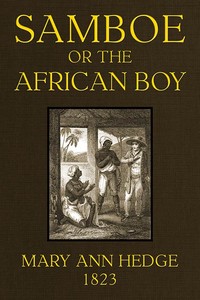
Samboe; or, The African Boy by Mary Ann Hedge
Let's talk about 'Samboe; or, The African Boy'. Published in 1823, this book is a historical artifact and a story that still resonates. It was written during a time when the debate about slavery was heating up in Britain, and you can feel that urgency in its pages.
The Story
The plot follows Samboe, a young boy living happily with his family in Africa. His world is shattered when he is captured by slave traders. The story then traces his traumatic journey across the Atlantic—the infamous Middle Passage—and his arrival on a plantation in the West Indies. We see him grapple with a new language, harsh labor, and the cruelty of the system. But it's not just a catalog of suffering. The heart of the story lies in Samboe's inner life: his vivid memories of his mother and his home, his struggle to understand the Christian teachings offered by some, and the small acts of kindness and friendship he finds with other enslaved people. It's a narrative focused on resistance of the spirit, on trying to preserve a sense of self when everything is trying to erase it.
Why You Should Read It
First, it's surprisingly accessible. Hedge writes in a clear, straightforward style that pulls you into Samboe's viewpoint. You're not getting a distant, historical overview; you're getting the confused, scared, and hopeful perspective of a child. This makes the injustices feel immediate and personal. Second, it's a fascinating look at early anti-slavery literature. This wasn't written long after the fact; it was part of the active fight for abolition. You can see how Hedge uses Samboe's innocence and inherent goodness to argue passionately against the inhumanity of slavery. It's a political book wrapped in a human story. Finally, it makes you think about all the lost stories and voices from this period. Samboe represents millions.
Final Verdict
This book is perfect for readers who love historical fiction but want to go beyond the usual bestsellers. It's for anyone curious about the roots of abolitionist writing and wants to understand the emotional arguments of the time. It's also a compelling, quick read for book clubs looking to discuss difficult history through a personal lens. Just be prepared—it's not a cheerful tale, but it's an important and moving one. Think of it as a conversation with the past, and Samboe is a guide you won't forget.
This is a copyright-free edition. Knowledge should be free and accessible.
Susan Gonzalez
2 months agoI took detailed notes while reading through the chapters and the evidence-based approach makes it a very credible source of information. A mandatory read for anyone in this industry.
Barbara Rodriguez
1 year agoI was skeptical about the depth of this book at first, but the nuanced approach to the central theme was better than I expected. A rare gem in a sea of mediocre content.
Robert White
1 month agoThe citations provided are a goldmine for further academic study.
Elizabeth Rodriguez
1 month agoI appreciate how this edition approaches the core problem, the attention to detail regarding the core terminology is flawless. Definitely a five-star contribution to the field.






Elizabeth Jackson
2 years agoWhile browsing through various academic sources, the author manages to bridge the gap between theory and practice effectively. This adds significant depth to my understanding of the field.