
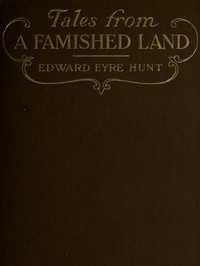
Tales from a Famished Land by Edward E. Hunt
Let's get one thing straight: this isn't a single, continuous novel. Tales from a Famished Land is exactly what the title says—a series of short stories and sketches. They're all connected by their setting: rural India under British colonial rule, often in periods of drought or famine.
The Story
There's no overarching plot. Instead, each story is a snapshot. We meet a British civil servant, overwhelmed and disillusioned, trying to administer aid he knows is insufficient. In another, an Indian farmer faces the impossible math of feeding his family as his fields turn to dust. A third might follow the tense silence in a village council as they debate who is 'deserving' of the last food reserves. The conflict is rarely loud or violent. It's the internal battle against despair, the erosion of hope, and the moral compromises forced upon people by a brutal system and a crueler climate. The 'famished land' is both literal and a metaphor for a society drained by colonial extraction.
Why You Should Read It
Hunt's power is in his restraint. He doesn't shout about injustice; he shows you the cracked earth and the hollow eyes, and you feel it. The characters, whether British or Indian, are never just symbols. They're tired, flawed, and trying to navigate a world that's falling apart. Reading this in the 21st century, it's impossible not to draw lines to modern crises—climate change, inequality, bureaucratic failure. The book makes history human-sized. It took me out of my comfort zone and made me sit with a deep, uncomfortable empathy. It's not a 'fun' read, but it's an important and strangely beautiful one.
Final Verdict
This is for the thoughtful reader. Perfect for anyone interested in colonial history from a ground-level view, or fans of quiet, character-driven literary fiction like the works of Jhumpa Lahiri or William Trevor. If you love fast-paced plots or clear heroes and villains, this might feel slow. But if you're willing to walk a mile in some very worn-out shoes and be left with questions that linger, Tales from a Famished Land is a small, profound punch of a book.
This is a copyright-free edition. Enjoy reading and sharing without restrictions.
Brian Brown
1 year agoHaving read this twice, the narrative structure is incredibly compelling. Worth every second.
Christopher Gonzalez
5 months agoI took detailed notes while reading through the chapters and the inclusion of diverse viewpoints strengthens the overall narrative. I'll be citing this in my upcoming project.