1

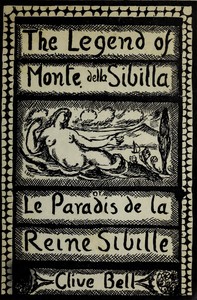
The Legend of Monte della Sibilla; or, Le paradis de la reine Sibille — A Reader’s Guide
(0 User reviews)
2484
Project Gutenberg
2020
Not confirmed
English poetry -- 20th century
Readers of public-domain and historical texts
Project Gutenberg digital edition
en
Edition facts
Words
5,810
Reading time
26 min
Text sections
1
Before opening The Legend of Monte della Sibilla; or, Le paradis de la reine Sibille — A Reader’s Guide, the edition data offers a quick orientation: 5,810 words, 26 min estimated reading time, and 1 detected text section.
The text analysis averages about 27.5 words per sentence, while the detected sections provide another way to judge how the source is divided.
Project Gutenberg metadata also associates the work with “English poetry -- 20th century,” connecting these edition facts with the source record’s subject description.
Source:
Project Gutenberg record #61120
Clive Bell's 1923 narrative poem recounts the journey of Hans Van Branbourg to the cave of the Sybil on Monte Sibillino, blending medieval legend with modern wit. The verse is marked by playful rhymes, digressive footnotes, and a skeptical narrator who questions the tale's moral.
Editorial Edition Score
4.4/5
★★★★★
★★★★★
Calculated from edition completeness, EPUB availability, text structure and catalogue metadata. Not a user rating.
How this score is calculated
- Description quality20 pts
- Title & short description10 pts
- Source metadata20 pts
- Text length15 pts
- Chapters / structure15 pts
- EPUB file integrity20 pts
Total of 100 points, scaled to a 2.5-5.0 range. Editions with an empty description or a missing EPUB file are not scored.
Edition quality
Read the Text
They had seen things to make saints curse,-- A gate that kept on clipping, clipping, (Much like a storm-door only worse,) And bound to give you such a nipping As nips the persons, now and then, Of thoughtless, shunting, railway-men. They had felt strange and ghastly winds, They had heard strange and sudden noises, And what in Italy one finds More rarely, gentle, whispering voices: 'Twas woman's doing--never doubt it-- A female influence ruled the air; And what the coarser said about it Was, that although when you got there The place might seem an honest hovel, Inside, they guessed, you'd find a brothel.
Indeed it was a dangerous place. But Germans are a stubborn race, Not to say obstinate, to boot Are fond of ladies: Herr Van Bran Swore that if anyone could do't He, Hans Van Branbourg, was the man; Pushed on to Norcia, then climbed higher, And with him went a single squire, Called Pons--they say an Englishman, I hope he was, because I can (As you I think will soon agree) Pronounce him brave as brave can be, Yet sensible as Sancho Panza, Wherewith I neatly close the stanza.
The knight pushed on, the squire behind, They cared not tuppence for the wind, Nor for the strange and sudden noises, Nor the discreetly whispering voices, Nor all those signs which long ago Did duty for a "_numero_". They passed the gates of bronze. They came To gates of crystal. Here they tapped. A lady-porter asked their name: Whereat the leader boldly rapped Out that which you've already heard, viz:-- "Herr Hans Van Branbourg, at your service." The doors flew wide, and to their eyes Revealed the Sibyl's paradise.
What saw they? Antoine de la Sale, Who wrote _Les quinze joies_ and all _Les cent nouvelles nouvelles_ as well, What I could not invent can tell; Seeing he came in 1420 To hold an inquest on the spot, And information got in plenty,-- Indeed he clambered to the grot, But only peeped inside the cavern-- Later, however, at the tavern He learnt the truth of what befell Van Branbourg in the Sybil's hell. They saw a crowd of pretty girls-- These were the Sybil's seneschals-- Who bade them change their dirty linen And rigged them out "from the beginning" (The text has _ab initio_); Up strike the fiddles; off they go Through pretty rooms and splendid halls And gardens framed in sheltering walls, The which were gay with flowers as well As comely "_dames et demoiselles_". Accompanied by knights and squires In divers fashionable attires, Much as our Longchamps beauties go Surrounded by their _gigolos._
Gaping they go; until they see 'La reine Sibylle', who from her throne Welcomed the strangers graciously, Observing she'd already known Men of their race, which (_vide Tacite_) Was honest, brave, but inficite,[2] And only that for want of practice In social arts and crafts. The fact is She much admired the Teuton physique, (I know some ladies can't abide it), So murmured, "You're my guests for this week: Later you'll tell me, when you've tried it, If you'll become my _pensionnaires._ I'll only add that we are here Until the crack of doom. And then?" Queried our cautious gentlemen.
"Then we shall see what we shall see," Answered the lady airily, Fobbing them off with such old saws As rarely fail to elicit roars Of laughter from the House and Bar, --As "Wait and see" and "Chi lo sa"; Then, sweetly added, "If you please, Hear our conditions, which are these. Who stays Eight days May go away the next. On no pretext Who stays more May or durst Go before The thirty-first. Who yet stays more Must outstay By one day His fifteenth score. Then or never: For who stays Further days Stays for ever,[3] "Further," said she, "if you will be My guests, this Paradise of mine Is at your service; what you see Of fun and beauty, flowers and wine, Is for your pleasure: also choose Amongst my ladies who are free (There're always plenty on the loose) Her who most charms you. Certainly You'll find them charming, trained to please, To move with grace, converse with ease, Well bred, well dressed, well read, well meant, In all ways sweetly competent:" Whereat squire Pons was "moult" content, And, plucking at his master's jacket, Said "Sir, let's stay and stand the racket."
They said they'd stay a week; but when The week was up they stayed again; Indeed "_les plaisirs étaient tels_" Days seemed like hours in that hell: So says La Sale, who ought to know What pleasures seemed like years ago, Seeing he wrote "_Les quinze joies De Mariage_", but then, _ma foi_, They took their pleasures[4] otherwise Than husbands in that Paradise.
Clive Bell's 1923 poem opens with a dedicatory stanza that immediately establishes a conversational, slightly sardonic tone. The speaker addresses Polly Flinders, describing a patch of snow that turns pink then yellow, and directs her to ask the innkeeper Gian Mannino about Monte Sibillino—only to be told 'they've bunged up the hole, thank God.' This blend of local color and wry humor sets the stage for a narrative that treats its medieval source material with irreverent affection.
The poem's meter and rhyme scheme are irregular, with Bell frequently breaking into asides, footnotes, and self-conscious commentary. The opening lines introduce Hans Van Branbourg, a German knight who, after touring Tuscany, hears of the Sybil's cave and insists on visiting despite warnings. The narrator's voice is that of a modern, skeptical storyteller, more interested in the absurdity of the quest than in any heroic ideal.
A Knight, a Squire, and a Skeptical Narrator
The poem's protagonist, Hans Van Branbourg, is introduced as a stubborn German who 'swore that if anyone could do't / He, Hans Van Branbourg, was the man.' He is accompanied by a single squire named Pons, whom the narrator hopes is an Englishman because he can pronounce him 'brave as brave can be, / Yet sensible as Sancho Panza.' This comparison to Cervantes' character signals the poem's comic, picaresque tone.
The locals try to dissuade the knight, telling tales of a monk who lost his wits and five bold youths who 'quaked like jelly' after seeing a gate that 'kept on clipping, clipping.' The narrator adds his own commentary, noting that the youths 'had seen things to make saints curse.' The warnings are delivered in a mix of folk superstition and earthy humor, with the coarser locals suggesting that inside the cave 'you'd find a brothel.'
Bell's narrator remains detached, occasionally questioning the sources: 'Or was that later?' This uncertainty keeps the reader aware that the tale is being filtered through a fallible, modern consciousness.
The Journey and the Cave's Wonders
Hans and Pons push on, ignoring the wind, noises, and whispering voices. They pass 'gates of bronze' and then 'gates of crystal,' where they tap. The poem's descriptive passages are brief and suggestive rather than elaborate. The narrator's voice continues to intrude, as when he remarks that the signs that once warned travelers now 'did duty for a "numero."'
The excerpt breaks off before the pair enters the cave, but the poem's title and framing promise an encounter with the Sybil's paradise. Bell draws on medieval legends of Monte della Sibilla, a mountain in the Apennines associated with a Sibyl who presides over a paradisal realm. The poem's subtitle, 'Le paradis de la reine Sibille,' signals this connection.
The journey itself is treated with a mixture of adventure and absurdity. The narrator's tone suggests that the real interest lies not in the destination but in the telling—the digressions, the footnotes, and the playful rhymes that undercut any epic pretensions.
Digressions, Footnotes, and Self-Conscious Verse
Bell's poem is notable for its frequent digressions and footnotes, which comment on the narrative and the act of writing. In the closing stanzas, the narrator addresses the reader directly, defending his approach: 'Myself, I never thought it clever / To fuss about the "grand forever."' He praises the knight's choice to 'live for love, though love is hell.'
The footnotes are particularly revealing. One calls for the legalization of 'the cockney rhyme,' another admits the verse is 'Sybilline' and 'portentously ill writ.' A third cites sources: 'Both Sale and Andrea Baberino say...' and references a book called 'La Salade' from which 'I draw the matter of my ballad.' These scholarly asides are delivered with a wink, blending erudition with self-deprecation.
This self-consciousness is central to the poem's effect. Bell is not simply retelling a legend; he is performing a kind of literary criticism in verse, questioning the value of heroic quests and the purpose of poetry itself.
Moral Ambiguity and the Question of Meaning
The poem's final stanzas explicitly address the moral of the story. The narrator acknowledges that 'wise men may differ' on whether there is more to life than laughter and hedonism. He sides with the knight's choice to pursue love, even if it leads to suffering. This conclusion is deliberately ambiguous, refusing to endorse either conventional piety or simple pleasure.
The poem's structure reinforces this ambiguity. The narrative frame—a modern poet retelling an old tale—allows Bell to distance himself from the material while still engaging with its themes. The irregular meter and playful rhymes prevent any single interpretation from dominating.
Readers should attend to the tension between the narrator's skepticism and his evident fascination with the legend. The poem does not resolve this tension; instead, it invites the reader to enjoy the journey of the verse itself, with all its quirks and contradictions.
Bell's poem rewards attention to its formal playfulness and its layered references. The footnotes and asides are not mere decoration; they are integral to the work's meaning. Readers familiar with the medieval sources may catch allusions to Antoine de la Sale's 'La Salade' and other texts, but the poem stands on its own as a witty meditation on storytelling. Approach it as you would a conversation with a learned, irreverent friend—one who is as interested in the telling as in the tale.
There’s something about Hans wandering toward the Sybil’s cave that feels less like adventure and more like a quiet descent inward—the same way I drift through Dante’s third canto, where hesitation hangs in every step. Bell’s skeptical footnotes almost guard that medieval awe. The Divine Comedy, Cary's Translation, Complete — Themes and Context holds that same vulnerable pause before the dark, disguised as a map.
There are no reviews for this eBook.
There are no comments for this eBook.
Reader reflection
What did you think of this book?
Answer a few questions and save a private reflection on this device.
Your progress
0
/
10
2
How much did you enjoy the reading experience?
3
Is this a title you would suggest to others?
4
What was the reading difficulty like?
5
Did the book give you something worth debating?
6
Did this book create an emotional response?
7
How did the reading compare with what you expected?
8
What did you think about the pace?
9
What changed or sharpened your thinking?
10