1

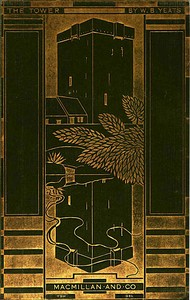
The tower — Edition Insights
(0 User reviews)
338
Project Gutenberg
2024
Not confirmed
English poetry -- Irish authors
Readers of public-domain and historical texts
Project Gutenberg digital edition
en
Edition facts
Words
13,379
Reading time
59 min
Text sections
2
The tower — Edition Insights can be approached with a clearer sense of reading commitment from its source measurements: 13,379 words, 59 min estimated reading time, and 2 detected text sections.
The text analysis averages about 33.0 words per sentence, while the detected sections provide another way to judge how the source is divided.
Project Gutenberg metadata also associates the work with “English poetry -- Irish authors,” connecting these edition facts with the source record’s subject description.
Source:
Project Gutenberg record #72985
Yeats's 1928 collection juxtaposes aging, art, and Irish history through poems like 'Sailing to Byzantium' and 'The Tower,' using vivid imagery of gold mosaics, battlements, and local legends.
Editorial Edition Score
4.5/5
★★★★★
★★★★★
Calculated from edition completeness, EPUB availability, text structure and catalogue metadata. Not a user rating.
How this score is calculated
- Description quality20 pts
- Title & short description10 pts
- Source metadata20 pts
- Text length15 pts
- Chapters / structure15 pts
- EPUB file integrity20 pts
Total of 100 points, scaled to a 2.5-5.0 range. Editions with an empty description or a missing EPUB file are not scored.
Edition quality
Read the Text
Never had I more Excited, passionate, fantastical Imagination, nor an ear and eye That more expected the impossible-- No, not in boyhood when with rod and fly, Or the humbler worm, I climbed Ben Bulben’s back And had the livelong summer day to spend. It seems that I must bid the Muse go pack, Choose Plato and Plotinus for a friend Until imagination, ear and eye, Can be content with argument and deal In abstract things; or be derided by A sort of battered kettle at the heel.
I pace upon the battlements and stare On the foundations of a house, or where Tree, like a sooty finger, starts from the earth; And send imagination forth Under the day’s declining beam, and call Images and memories From ruin or from ancient trees, For I would ask a question of them all.
Beyond that ridge lived Mrs. French, and once When every silver candlestick or sconce Lit up the dark mahogany and the wine, A serving man that could divine That most respected lady’s every wish, Ran and with the garden shears Clipped an insolent farmer’s ears And brought them in a little covered dish.
Some few remembered still when I was young A peasant girl commended by a song, Who’d lived somewhere upon that rocky place, And praised the colour of her face, And had the greater joy in praising her, Remembering that, if walked she there, Farmers jostled at the fair So great a glory did the song confer.
And certain men, being maddened by those rhymes, Or else by toasting her a score of times, Rose from the table and declared it right To test their fancy by their sight; But they mistook the brightness of the moon For the prosaic light of day-- Music had driven their wits astray-- And one was drowned in the great bog of Cloone.
Strange, but the man who made the song was blind, Yet, now I have considered it, I find That nothing strange; the tragedy began With Homer that was a blind man, And Helen has all living hearts betrayed. O may the moon and sunlight seem One inextricable beam, For if I triumph I must make men mad.
And I myself created Hanrahan And drove him drunk or sober through the dawn From somewhere in the neighbouring cottages. Caught by an old man’s juggleries He stumbled, tumbled, fumbled to and fro And had but broken knees for hire And horrible splendour of desire; I thought it all out twenty years ago:
Good fellows shuffled cards in an old bawn; And when that ancient ruffian’s turn was on He so bewitched the cards under his thumb That all, but the one card, became A pack of hounds and not a pack of cards, And that he changed into a hare. Hanrahan rose in frenzy there And followed up those baying creatures towards--
O towards I have forgotten what--enough! I must recall a man that neither love Nor music nor an enemy’s clipped ear Could, he was so harried, cheer; A figure that has grown so fabulous There’s not a neighbour left to say When he finished his dog’s day: An ancient bankrupt master of this house.
Before that ruin came, for centuries, Rough men-at-arms, cross-gartered to the knees Or shod in iron, climbed the narrow stairs, And certain men-at-arms there were Whose images, in the Great Memory stored, Come with loud cry and panting breast To break upon a sleeper’s rest While their great wooden dice beat on the board.
As I would question all, come all who can; Come old, necessitous, half-mounted man; And bring beauty’s blind rambling celebrant; The red man the juggler sent Through God-forsaken meadows; Mrs. French, Gifted with so fine an ear; The man drowned in a bog’s mire, When mocking muses chose the country wench.
Did all old men and women, rich and poor, Who trod upon these rocks or passed this door, Whether in public or in secret rage As I do now against old age? But I have found an answer in those eyes That are impatient to be gone; Go therefore; but leave Hanrahan For I need all his mighty memories.
Old lecher with a love on every wind Bring up out of that deep considering mind All that you have discovered in the grave, For it is certain that you have Reckoned up every unforeknown, unseeing Plunge, lured by a softening eye, Or by a touch or a sigh, Into the labyrinth of another’s being;
Yeats's 1928 collection The Tower opens with a speaker who declares that Ireland is 'no country for old men,' a line that immediately establishes the volume's central tension between bodily decay and the permanence of art. The poems that follow—including the title poem, 'Meditations in Time of Civil War,' and 'Nineteen Hundred and Nineteen'—move between personal lament and public elegy, often grounding abstract reflection in specific local details: a serving man clipping an insolent farmer's ears with garden shears, a 'sooty finger' of a tree, or the 'gold mosaic of a wall' in Byzantium.
The Body and the Artifice
The opening stanzas of 'Sailing to Byzantium' present old age as 'a tattered coat upon a stick,' a figure that recurs in the collection's preoccupation with physical frailty. Yet the poem does not simply reject the body; it imagines the soul 'clap its hands and sing, and louder sing / For every tatter in its mortal dress.' The desired transformation is into a mechanical bird—'such a form as Grecian goldsmiths make / Of hammered gold and gold enamelling'—that sings 'Of what is past, or passing, or to come.' This artifice is not escape but a different kind of engagement with time.
In 'The Tower,' the speaker paces 'upon the battlements' and calls forth 'Images and memories / From ruin or from ancient trees.' The body remains a 'caricature, / Decrepit age that has been tied to me / As to a dog's tail,' but the imagination is 'more excited, passionate, fantastical' than in youth. The tension is unresolved: the speaker must 'bid the Muse go pack' or be 'derided by / A sort of battered kettle at the heel.'
Local Legends and Historical Echoes
Several poems anchor their meditations in Irish folklore and recent history. 'The Tower' recalls Mrs. French, whose servant 'clipped an insolent farmer's ears / And brought them in a little covered dish.' The anecdote is presented as a local memory, 'some few remembered still when I was young.' In 'The Friends of His Youth,' Madge appears 'a stone upon her breast' and 'Peter that had great affairs' shrieks 'I am King of the Peacocks.' These figures are not fully explained; they emerge as fragments of a shared past, their stories 'known' only to the old.
'The Three Monuments' satirizes public monuments to 'our most renowned patriots,' where 'all the popular statesmen say / That purity built up the state.' The poem's final line—'The three old rascals laugh aloud'—undercuts official pieties with a vernacular irreverence. The collection's notes, though not excerpted here, likely clarify some of these allusions, but the poems themselves treat them as part of a living, contested memory.
Structure and Voice Across the Collection
The volume's arrangement moves from the formal, incantatory quatrains of 'Sailing to Byzantium' to the looser, more conversational stanzas of 'The Tower' and the ballad-like rhythms of 'A Man Young and Old.' The latter sequence includes 'The Empty Cup,' 'His Memories,' and 'Summer and Spring,' which use simple rhyme schemes and refrains—'And for that reason am I crazed / And my sleep is gone'—to evoke a speaker whose memories are both vivid and unreliable.
Yeats frequently shifts between first-person declaration and dramatic monologue. 'The Secrets of the Old' adopts the voice of someone who 'ha[s] old women's secrets now,' while 'His Wildness' imagines a 'peacock cry' as 'natural to a man / That lives in memory.' The excerpt from 'Oedipus at Colonus' introduces a choral, aphoristic tone: 'Never to have lived is best.' This variety of voices prevents any single poem from standing as the collection's definitive statement.
Readers approaching The Tower may find it useful to read the poems in sequence, noting how Yeats juxtaposes the personal and the political, the local and the mythical. The notes at the end of the volume, though not included here, provide context for some references. Pay attention to recurring images—the stone, the bird, the tower itself—and to the way Yeats uses meter and rhyme to shift between lament and defiance.
The rain kept me indoors last Tuesday, and I returned again to The Tower, those gold mosaics shimmering against Yeats’s cold, aging bones. Somewhere between his battlements and my own quiet restlessness, I thought of Wellington’s lines at Talavera, and later found myself turning pages of The Battle of Talavera — Themes and Context, almost without deciding to.
There are no reviews for this eBook.
There are no comments for this eBook.
Reader reflection
How did this book work for you?
Your answers remain private and are stored only in this browser.
Your progress
0
/
10
2
Was reading this book enjoyable?
3
How likely are you to recommend this book?
4
How much effort did this book require?
5
Could you follow the author’s main argument?
6
How personally connected did you feel to the book?
7
Which aspect of the book did you value most?
8
Did you gain anything practical from the text?
9
What is the main idea you are taking away?
10