1

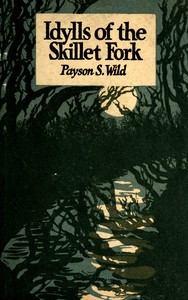
Idylls of the Skillet Fork — Reading Notes
(0 User reviews)
98
Project Gutenberg
2024
Not confirmed
Dialect poetry, American; Country life -- United States -- Poetry
Readers of public-domain and historical texts
Project Gutenberg digital edition
en
Edition facts
Words
16,369
Reading time
72 min
Text sections
30
Before opening Idylls of the Skillet Fork — Reading Notes, the edition data offers a quick orientation: 16,369 words, 1 hr 12 min estimated reading time, and 30 detected text sections.
The text analysis averages about 27.7 words per sentence, while the detected sections provide another way to judge how the source is divided.
Project Gutenberg metadata also associates the work with “Dialect poetry, American,” connecting these edition facts with the source record’s subject description.
Source:
Project Gutenberg record #72807
A collection of dialect poems set in the Skillet Fork region, capturing rural life through the voices of characters like Bill and Laury. The poems shift between comic anecdotes, lyrical nature observations, and somber reflections on war and loss, all rendered in a distinctive vernacular.
Editorial Edition Score
4.7/5
★★★★★
★★★★★
Calculated from edition completeness, EPUB availability, text structure and catalogue metadata. Not a user rating.
How this score is calculated
- Description quality20 pts
- Title & short description10 pts
- Source metadata20 pts
- Text length15 pts
- Chapters / structure15 pts
- EPUB file integrity20 pts
Total of 100 points, scaled to a 2.5-5.0 range. Editions with an empty description or a missing EPUB file are not scored.
Edition quality
Read the Text
Ever b’en Whar a mockin’-bird was tunin’ up ’is fiddle? It’s a riddle
How ’e symfonizes ev’ry sort o’ noise An’ employs A composer’s subterfujes (ez ye’ve noted) Single throated. Wal, I seen one settin’ up thar (knowed ’twas him) On a limb Of a deadish kind o’ ellum, ’n’ I could tell Jes’ ez well
’T ’e was cockyer than a roarin’ swearin’ pirate By the high rate He was thrashin’ o’ them wings o’ his, an’ tail Like a flail. First I tho’t I was a-list’nin’ tew a martin Sure for sartin; Then a blue-jay almos’ give me ’n awful shock With ’is squawk;
I was jest a-gittin’ used ter hearin’ that bird, When a cat-bird Started in ter yowl an’ sputter, julluk Tabby When she’s gabby; Then some swallers, chickadees, an’ whippoorwills Give me thrills, An’ I tell ye I was altergether foozled, Jes’ bamboozled,
Ez I watched that clever cynnic keep a-rockin’ An’ a-mockin’, Till at last he got so bubbly full o’ fizz Thet ’e riz Off thet lonely perch o’ his’n right up square Int’ the air, Still a-swingin’ an’ a-singin’ in ’is revel Like the devil!
Then ’e come ri’ down agin an’ hit the spot Whar ’e’d sot; Hadn’t lost a single note—jes’ kep’ ’er goin’ ’S if he’s mowin’.
Dew ye reckon I’ll fergit thet garrylus Little cuss? Wal, ye got anuther “reckon” comin’ then— Mebbe ten.
They’s a hull snarl o’ potes hez driveled ’bout Joon With its leefyness, freshness an’ greenth; ’N’ if I was anuther, I s’pose—which I ain’t— I’d be the four umpty an’ steenth.
Ez regards ter the Skillet—wal, pardner, b’leeve me, It’s right in its prime, buggosh; Yew kin talk all yer wanter, it’s fine ter jes’ sawnter An’ look at ol’ Nacher a-slosh.
I was thar spell ago—druv sixteen mile With Bill an’ a load o’ soy beans; An’ I swar ter the Dooce thet I never hed knowed Afore what _greenin’_ means.
Be’n a-rainin’ like sin, but hed then faired up An’ the sky was julluk a gentian; I ain’t never knew sich a hevvenly blue, Ef ye’ll ’low me in passin’ ter mention.
The river was full, plum full ter the top, A matter o’ thirty odd feet, An’ the water hed backed ont’ the bottoms right smart, But was dreenin’ off fast with the heat.
’Twas a sarpent o’ choc’lit a-rithin’ an’ twistin’ Ri’ down a arborial tunnel; An’ Bill ’e sez, “Naow, ef we hed a ol’ scaow, We could flote ter Noorleans thru a funnel!”
But the way them fiel’s was enjoyin’ thersel’s! They was fairly yellin’ with glee; I reckon I must ’a’ be’n pretty high keyed, An’ I tell ye it jes’ got me.
I kind o’ suspishun Bill heerd suthin’ tew, Fer a exstasy hit ’im like pain; It looked like fer sure he was feelin’ the lure O’ the siren thet sings after rain.
Will’s drove ter Keene’s fer ’nockerlated seed; Queer, ain’t it, ’bout thet nitrigin—_Down Rover!_ Will sez we git mos’ twict ez much o’ feed Fer growin’ them thar teeny warts on clover....
Uh huh.... We’re limin’ tew; Will sez the sile Hez soured bad an’ needs a “alkali”.... I do’ know what ’tis—never heerd it—I’ll Ax him; on sich like words I’m kind o’ shy....
Malviny? Reely? Throwed anuther fit? Yew better call, I reckon, Docter Mott; Seems like she’s gittin’ old enuff ter quit— Will sez he ’lows it’s jes’ plain fits she’s got.
Our Duroc “Iphijeny” ’s littered ... eight.... Jes’ walkin’ cherries! My, but how they’ll grow! Will’s figg’rin’ now on what’ll be the’r weight Come Fall; he sez our corn’s a-runnin’ low....
D’yew say it’s yaller? Prob’ly got “damp feet”; Will sez alfalfy’ll do thet when’t’s tew wet.... The way it gits ter rain _is_ hard ter beat; But then, Will sez it ain’t no use ter fret....
No, couldn’t go las’ night—set up fer Nell; Vern Rowell druv ’er out—seemed like all night; ’Twas nine afore they come.... He means reel well, But Will he sez the Rowells ain’t quite right....
She _was_? She’s led the singin’ awful good; I never tho’t she’d be baptized; Will sez— _O Willie! Git right off!_—He’s clum the wood Pile; that ’ar’ way he’ll _fall_—Lan’ sakes, he _hez_!
The Skillet Fork is not a picturesque river. The opening poem describes it as “crookeder then worms,” with “green an’ scummy” water and logs that look “’zac’ly like ’t was drownded.” Yet the speaker insists it “hants yer dreams.” This tension between unlovely reality and persistent attachment sets the tone for the collection. Payson Sibley Wild’s dialect verse, first published in the Chicago Tribune’s “A Line O’ Type Or Two,” presents a community seen through the eyes of a narrator who addresses a farmer named Bill. The poems move from comic mishaps—like catfish grabbing—to more serious meditations on war and loss, all while maintaining a consistent, colloquial voice.
Dialect as a Lens on Character
The poems are written in a thick rural dialect that does more than mark setting; it shapes how characters think and feel. In “The Skillet,” the speaker’s grammar and word choices—“yew,” “jes’,” “thar,” “’cos”—create an intimate, oral quality. The narrator’s aside “I’d tell ye haow ’f I knowed ye’d b’lieve me” acknowledges the listener’s potential skepticism, a self-aware move that builds trust. In “Bill on War,” Bill’s speech becomes more halting when discussing his son Lon: “I’d see ’t he went” is delivered with a cough and a blown nose, the physical details undercutting the brave sentiment. The dialect is not uniform; it shifts with emotion, becoming more fragmented in moments of tension.
Recurring Motifs and Structural Patterns
Several motifs recur across the poems, linking them into a loose cycle. The Skillet Fork itself appears repeatedly, its crooked course and muddy banks a constant backdrop. Animals—catfish, mockingbirds, ’possums, and especially hogs—serve as both subjects and metaphors. In “Treed,” a wild boar hunt becomes a tall tale of a man forced up a tree, the narrative framed by Bill’s recollection. The poem “Bill on War” uses the story of a bull named Ben to discuss national character: “We’re all tew pussy ’n’ prizey ’n’ prosp’rus like / Ter tech a wil’cat even with a fork.” This analogy, drawn from farm life, grounds abstract ideas in concrete experience. The collection also alternates between comic pieces (like “Laury’s ‘Eats’”) and somber ones (like “Killed in Action”), creating a deliberate rhythm of mood.
Pace and the Weight of Silence
The poems vary in pace from brisk, anecdotal narratives to slower, more reflective passages. “The ’Possum Hunt” moves quickly through action, while “Bill on War” lingers on a single conversation. The most striking shift occurs in the final lines of “Bill on War,” where the narrator’s light remark is met with Bill’s choked response: “I’d see ’t he went.” The stage direction that follows—“a gust o’ wind / Put out my light”—creates a sudden darkness, both literal and figurative. This use of weather and physical gesture to punctuate emotion is a recurring technique. In “Treed,” the punchline of the tall tale is delivered with a shrug: “An’ thet’s what ’e done.” The understatement leaves the listener to fill in the fear. Wild often lets a single line or image carry the weight of a poem’s meaning, trusting the reader to catch the shift.
These poems reward reading aloud, as the dialect’s rhythms and rhymes become more apparent. Pay attention to the moments when the narrator steps back—a cough, a gust of wind, a change in the weather—for these are where the collection’s emotional depth lies. The Skillet Fork may be unlovely, but Wild’s handling of its people’s voices makes it memorable.
Sometimes the voices in Idylls of the Skillet Fork stay with me long after I close the pages—that ache of loss hiding under everyday talk. It reminds me of how another place, with its own salt air and quiet, holds similar echoes of people and their passing. That feeling lingers softly in On old Cape Cod — Themes and Context, like a memory I wasn’t expecting.
There are no reviews for this eBook.
There are no comments for this eBook.
Reader reflection
Your personal reading reflection
Build a private reading journal entry for this title.
Your progress
0
/
10
2
What was your overall reaction to the book?
3
How likely are you to recommend this book?
4
What was the reading difficulty like?
5
Was the book easy to understand?
6
Which aspect of the book did you value most?
7
Would you like to discuss this book with someone?
8
Did the book deliver what you hoped for?
9
What is the main idea you are taking away?
10