1

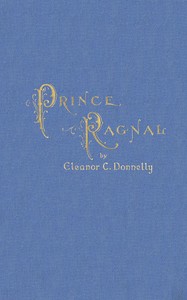
Prince Ragnal, and other holiday verses — A Reader’s Guide
(0 User reviews)
61
Project Gutenberg
2022
Not confirmed
Christmas poetry
Readers of public-domain and historical texts
Project Gutenberg digital edition
en
Edition facts
Words
6,200
Reading time
27 min
Text sections
6
Before opening Prince Ragnal, and other holiday verses — A Reader’s Guide, the edition data offers a quick orientation: 6,200 words, 27 min estimated reading time, and 6 detected text sections.
The text analysis averages about 20.7 words per sentence, while the detected sections provide another way to judge how the source is divided.
Project Gutenberg metadata also associates the work with “Christmas poetry,” connecting these edition facts with the source record’s subject description.
Source:
Project Gutenberg record #69379
Eleanor C. Donnelly's 1898 collection blends a medieval Irish legend of a leper prince with devotional Christmas poems, contrasting pagan pride and Christian humility through vivid sensory imagery and formal verse.
Editorial Edition Score
4.5/5
★★★★★
★★★★★
Calculated from edition completeness, EPUB availability, text structure and catalogue metadata. Not a user rating.
How this score is calculated
- Description quality20 pts
- Title & short description10 pts
- Source metadata20 pts
- Text length15 pts
- Chapters / structure15 pts
- EPUB file integrity20 pts
Total of 100 points, scaled to a 2.5-5.0 range. Editions with an empty description or a missing EPUB file are not scored.
Edition quality
Read the Text
AND OTHER HOLIDAY VERSES
Copyright, 1898, by Eleanor C. Donnelly.
MY REVERED FRIEND OF MANY YEARS,
Rev. Matthew Russell, S. J.,
Editor of the “Irish Monthly,” Dublin, Ireland,
THIS LITTLE BOOK IS DEDICATED
BY HIS SPECIAL PERMISSION.
THE STABLE OF BETHLEHEM 31
THE THREE MASSES ON CHRISTMAS DAY 34
A Christmas Legend of Early Christian Ireland.
White and chill from the wintry skies, The starlight falls upon ancient Eire: The wind makes moan thro’ the leafless trees Of Devenish Isle, like a soul in fear,-- Deep in the heart of its snowy woods, Fanning a peat-flame, lone and drear.
The ruined hut where that turf-fire glows Hath never a roof of thatch or stone, But bow and spear on the rude walls hang, And a bed of skins on the floor is strewn, Where, close to the embers, stern and still, Ragnal the leper sits alone.
Ragnal of Errigal, prince of doom, His face, a death-mask of despair;-- The foul disorder’s loathly scales Lacquer his skin with their hideous glair: Dulling the blue of his brave young eye, Dimming the gold of his tangled hair.
Bowed like a churl of three-score ten, His peakéd chin in his wasted hands, He watches the flames with a sluggish eye, Sparkle and glow in their fiery dance; Till, deep in the embers, pictured, lie His life’s lost hopes--its dead romance.
A royal castle beside the sea, On breezy cliffs, exultant, set: A Prince and Princess, young and fair, Pacing the grassy parapet, The golden fringe of his long, bright hair Sweeping the maiden’s locks of jet.
Thro’ perfum’d air, replete with peace, The swallows skim the blue waves’ flow: The lovely Dympna’s hand, at rest On her lover’s arm (a thing of snow)-- Thrills, as he bends his head, and breathes In her blushing ear, a whisper low.
She gathers the fleece of her floating veil From the nodding shade of his raven plume, As, gravely pleading, he bends again To hear those bright lips speak his doom. --Why does she start and lift her head? Why are her cheeks devoid of bloom?
He sees the flash of her wide, dark eye, He hears her clear voice rise and fall: “Sooner than sell my faith in Christ, My life I’d yield--my love--my all! Content my bridal vows should prove A martyr’s grave and a virgin’s pall!”
Then, in the flames, his other self He sees, erect in scorn and pride: “Sooner would I a leper be, Far from the world to crouch and hide, Than bend to a Christian priest mine knee, Or take to mine arms a Christian bride!”
The royal blood leaps in her face, Her voice rings out its golden knell: “O Christ! incline Thy pitying grace, And pardon this poor infidel!” Then, with averted, shuddering gaze, “Unhappy Ragnal! fare thee well!”
A sudden darkness shuts her in ... The flutter of her snowy gown-- The sunlit towers--the sparkling waves In pallid embers, crumble down; As Ragnal by the fire sits, A leprous Prince without a crown!
“O lily, nurtured by the sea! Sweet Dympna, long-lost, promised bride! Thine unknown Christ”--(he cries aloud): “This night hath triumph’d o’er my pride! Forgive me!”--Lo! a gust of song Fills all the wintry world outside!
A thrilling, heavenly harmony From silvern harps and lutes divine: The Leper, prostrate on his face, Drinks in the glorious draught like wine; Then, rising, reels like drunken wight, Into the starlight’s wondrous shine.
For strange, unearthly lustres fill The frosty air. To Ragnal blown, Across Lough Erne, there comes the breath Of sweetest blossoms ever grown; Yet, right or left, above, below, No living thing or shape is shown.
All wordless, o’er the sparkling Lough, The music steals again--but hark! “_Gloria in excelsis!_” sings A voice, up-soaring like a lark; While: “_Et in terra pax!_” (strange words!) Drop down to Ragnal thro’ the dark.
His breast heaves with a mighty fear, The strong man trembles like a reed: The while the minstrels float before, (Tho’ ulcer’d feet and ankles bleed), Straight onward through the shining wood, He needs must follow where they lead;
And walks, and walks, and walks, and walks, His bare feet buried in the snow; While flaming eyes of savage beasts From bog and thicket, glare and glow. He sees the stars slide down the east, He hears the cocks begin to crow.
Yet walks, and walks, and walks, and walks, Till ev’ry nerve and sinew aches, And sweat and blood and loathly scales Mark ev’ry painful step he takes-- When, suddenly, the rapturous sound That lured him on--his path forsakes!
The title poem of Eleanor C. Donnelly's 1898 collection opens on a scene of stark isolation: a leprous prince, Ragnal, sits alone in a roofless hut on Devenish Isle, watching a peat fire. The verse dwells on physical decay—'loathly scales / Lacquer his skin with their hideous glair'—while a flashback reveals the cause: his refusal to convert to Christianity for love of the pagan princess Dympna. This narrative poem, subtitled 'A Christmas Legend of Early Christian Ireland,' sets the collection's central tension between worldly pride and spiritual surrender.
Contrasts of Light and Decay
Donnelly builds the legend around sharp visual oppositions. The opening stanzas contrast 'white and chill' starlight with the 'ruined hut' and Ragnal's 'death-mask of despair.' The fire that warms him also conjures memories of a sunlit castle 'beside the sea, / On breezy cliffs, exultant, set,' where the prince's 'long, bright hair' sweeps Dympna's 'locks of jet.' These paired images—gold and black, warmth and rot, youth and premature age—underscore the poem's moral divide. The leprosy itself is described in terms that blend the repulsive and the almost luminous: 'foul disorder’s loathly scales' that 'lacquer' the skin, dulling the blue of his eye and dimming the gold of his hair. Donnelly's diction here is precise, using words like 'glair' (a slimy substance) to evoke both physical horror and a kind of sick sheen.
The Princess Dympna's Defiance
Dympna's brief appearance in the flashback is the poem's dramatic hinge. When Ragnal pleads with her, she responds with a vow that fuses romantic and religious devotion: 'Sooner than sell my faith in Christ, / My life I’d yield—my love—my all! / Content my bridal vows should prove / A martyr’s grave and a virgin’s pall!' Her speech is direct and metrically emphatic, the lines ending with sharp monosyllables. In reply, Ragnal declares he would rather be a leper than 'bend to a Christian priest mine knee, / Or take to mine arms a Christian bride.' The symmetrical structure of their oaths—each rejecting the other's core value—creates an impasse that the poem does not resolve. The excerpt breaks off before any Christmas transformation occurs, leaving Ragnal's fate uncertain.
Devotional Poems and the Humility of the Manger
The shorter poems that follow the title piece shift from narrative to lyric meditation. 'The God-Man' condenses the Incarnation into four lines: 'Would I might be as God!' the first man cried... 'Lo! to repair the ruin wrought by Pride, / Christ, in the manger, we behold as Man!' The epigrammatic form contrasts with the sprawling legend. 'Bethlehem’s Queen' employs a litany of Marian titles—'Clear Mirror of justice,' 'Rare Mystical Rose,' 'Fair Star of the morning'—and a repeated exclamatory structure ('O what would this life be without our sweet Mother?'). The poem's imagery of refuge ('nestle, like birds, ’neath thy sky-color’d mantle') offers a counterpoint to Ragnal's exposed hut. Together, these pieces frame the Incarnation as an antidote to the pride that drives the legend's tragedy.
Readers approaching this collection should note that the title poem is incomplete in the available excerpts; its ending—and the promised Christmas resolution—must be inferred from the subtitle. The devotional poems, while conventional in form, gain resonance when read against the legend's stark opening. Donnelly's verse rewards attention to her sensory details and structural symmetries, which give even familiar religious themes a local, tactile weight.
Holding this old Donnelly volume, I remembered the winter afternoons my grandmother read aloud from Prince Ragnal, the leper’s quiet dignity settling over us like snow. Another collection once stirred that same hush—In Cupid's court — A Closer Reading—where courtship’s pettiness gave way to something tender, reminding me how such poems keep a room’s warmth alive long after the candles are gone.
There are no reviews for this eBook.
There are no comments for this eBook.
Reader reflection
What did you think of this book?
Answer a few questions and save a private reflection on this device.
Your progress
0
/
10
2
How did the book work for you overall?
3
How likely are you to recommend this book?
4
Did the language feel accessible?
5
Would you like to discuss this book with someone?
6
How understandable was the text?
7
Did the book offer a fresh perspective?
8
Could you see yourself revisiting this book?
9
What is the main idea you are taking away?
10