1

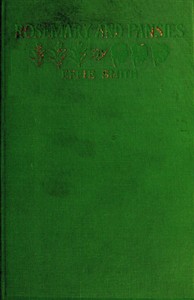
Rosemary and Pansies — Story, Setting & Ideas
(0 User reviews)
226
Project Gutenberg
2020
Not confirmed
American poetry -- African American authors; American poetry -- 20th century; Christian poetry, American
Readers of public-domain and historical texts
Project Gutenberg digital edition
en
Edition facts
Words
8,442
Reading time
37 min
Text sections
2
This digital edition of Rosemary and Pansies — Story, Setting & Ideas is described by source-level measurements including 8,442 words, 37 min estimated reading time, and 2 detected text sections.
The text analysis averages about 28.4 words per sentence, while the detected sections provide another way to judge how the source is divided.
Project Gutenberg metadata also associates the work with “American poetry -- African American authors,” connecting these edition facts with the source record’s subject description.
Source:
Project Gutenberg record #63790
Effie Waller Smith's 1909 collection of Christian and reflective poetry, marked by a tension between earthly loss and spiritual assurance. Poems like 'At the Grave of One Forgotten' and 'The Patchwork Quilt' use specific, recurring imagery—graves, quilts, fading light—to probe memory, love, and the value of incomplete lives. The voice is restrained, often addressing death directly, yet insists on a transcendent perspective.
Editorial Edition Score
4.5/5
★★★★★
★★★★★
Calculated from edition completeness, EPUB availability, text structure and catalogue metadata. Not a user rating.
How this score is calculated
- Description quality20 pts
- Title & short description10 pts
- Source metadata20 pts
- Text length15 pts
- Chapters / structure15 pts
- EPUB file integrity20 pts
Total of 100 points, scaled to a 2.5-5.0 range. Editions with an empty description or a missing EPUB file are not scored.
Edition quality
Read the Text
traveled darksome ways, And was tired, Who looked forth unto the end, And saw Death come as a friend Long desired?
Who it was that rests below Not earth’s wisest now may know, Or can tell; But these blossoms witness bear They who laid the sleeper there Loved him well.
In the dust that closed him o’er Planted they the garden store Deemed most sweet, Till the fragrant gleam, outspread, Swept in beauty from his head To his feet.
Still, in early springtime’s glow, Guelder-roses cast their snow O’er his rest; Still sweet-williams breathe perfume Where the peonies’ crimson bloom Drapes his breast.
Passing stranger, pity not Him who lies here, all forgot, ’Neath this earth; Some one loved him--more can fall To no mortal. Love is all Life is worth.
THE SHEPHERDS’ VISION
Upon the dim Judean hills, The shepherds watched their flock by night, When on their unexpectant gaze Outshone that vision of delight, The fairest that did ever rise To awe and gladden earthly eyes.
From no far realm those shepherds came, Treading the pilgrim’s weary road; Not theirs the vigil and the fast Within the hermit’s mean abode; ’Twas at their usual task they stood, When dawned that light of matchless good.
Not only to the sage and seer Life’s revelation comes in grace; Most often on the toiler true, Who, working steadfast in his place, Looks for the coming of God’s will, The glorious vision shineth still.
Our dead forefathers, mighty though they be, For all their power still leave our spirits free; Though on our paths their shadows far are thrown, The life that each man liveth is his own.
Time stands like some schoolmaster old and stern, And calls each human being in his turn To write his task upon life’s blackboard space; Death’s fingers then the finished work erase, And the next pupil’s letters take its place.
That he who wrote before thee labored well Concerns thee not: thy work for thee must tell; ’Tis naught to thee if others’ tasks were ill: Thou hast thy chance and canst improve it still. From all thy fathers’ glory and their guilt The board for thee is clean: write what thou wilt!
O giant oak, majestic, dark, and old, A hundred summers in the woodland vast, From the rich suns that lit thy glories past, In thy huge trunk thou storedst warmth untold; Now, when the drifted snows the hills enfold, And the wild woods are shaken in the blast, O’er this bright hearth thou sendest out at last The long-pent sunshine that thine heart did hold.
Like thee, O noble oak-tree, I would store From days of joy all beauty and delight, All radiant warmth that makes life’s summer bright, So that I may, when sunniest hours are o’er, Still from my heart their treasured gleam outpour, To cheer some spirit in its winter night.
I dare not hope that in this dawning year I shall accomplish all my dreams hold dear; That I, when this year closes, shall have wrought All the high tasks that my ambitions sought, And that I shall be then the spirit free, Strong, and unselfish, that I long to be.
But truly do I hope, resolve, and pray That, as the new year passes, day by day My footsteps, howsoever short and slow, Shall still press forward in the path they go, And that my eyes, uplifted evermore, Shall look forth dauntless to the things before; And when this new year with the old has gone, I still may courage have to struggle on.
Pale coin, what various hands have you passed through Ere you to-day within my hand were laid? Perchance a laborer’s well-earned hire you made; Some miser may have gloated long on you; Perhaps some pitying hand to Want outthrew; And, lost and won through devious tricks of trade, You may have been, alas! the full price paid For some poor soul that loved you past your due.
No doubt ’tis well, O imaged Liberty, You see not where your placid face is thrust, Nor know how far man is from being free, Bound as he is by money’s fateful lust, While to his anxious soul like mockery Seem those fair, graven words: “In God we trust.”
Effie Waller Smith's Rosemary and Pansies (1909) opens with a poem set in a churchyard where a forgotten grave is marked only by flowers. The speaker does not know who lies there—young or old, man or woman—but insists that being loved is enough: 'Love is all / Life is worth.' This early poem establishes a pattern that runs through the collection: a focus on what remains after loss, and a refusal to treat death as mere tragedy. Smith returns repeatedly to graves, fading objects, and the question of whether a life cut short has meaning.
Graves and the Unknowable Dead
Several poems in Rosemary and Pansies center on graves whose occupants are unknown or barely remembered. In 'At the Grave of One Forgotten,' the speaker speculates about the sleeper's identity—'Was a young man in his strength… Did a maiden's parents wail… Was it else one full of days'—but concludes that the flowers planted by mourners are the only witness. 'A Mountain Graveyard' and 'Historic Ground' similarly dwell on burial sites where names have been lost. Smith does not treat this anonymity as a failure of memory; instead, she suggests that the act of loving, even when forgotten, is sufficient. The poems resist the urge to fill in biographical details, leaving the dead as figures of quiet dignity.
The Value of an Unfinished Life
Smith directly confronts the idea that a short life is wasted. In 'My Brother,' written for a sibling who died at twenty-one, she asks: 'Were you all then nothing worth?' The poem answers by trusting that God will 'unfold / More than earthly eyes behold.' 'In Fuller Measure' imagines the dead brother himself responding to mourners who say he missed so much: 'In fuller measure far / All that life gave to me I still retain.' The collection repeatedly argues that death does not cancel purpose. 'Benignant Death' goes further, calling death a 'cooling dew' that renews 'parched souls.' This is not a simple consolation; Smith acknowledges grief's bitterness while insisting on a larger frame.
Objects That Hold Time
Smith uses everyday objects—a patchwork quilt, a silver dollar, a wood fire—as vessels for memory and meditation. 'The Patchwork Quilt' traces the life of a woman through the squares of fabric she has sewn, each piece recalling a different era. The poem moves from a young mother praying over her child to an old woman whose 'darkening eyes' see 'forms and faces unforgot.' The quilt becomes a map of the past, its worn textures mirroring the wear of the hands that made it. 'To a Silver Dollar' and 'The Wood Fire' similarly take a single object and unfold its associations. These poems ground abstract themes of time and loss in tangible, specific things.
Readers approaching Rosemary and Pansies will find a poet who works in traditional forms—rhymed quatrains, regular meter—but uses them to explore unsettled questions. Smith does not offer easy answers; her poems often end in paradox, as when 'October' declares that 'Death alone can bring the richest gain.' Pay attention to the recurring images of fading light, worn fabric, and unmarked graves—they are not decorative but central to the book's argument about what endures.
There’s something about Rosemary and Pansies that sits with you quietly, the way twilight lingers after a long day. That gentle tension between what’s lost and what remains felt so personal. It reminded me of another old story, Roderick, the last of the Goths — Background and Themes, where memory and ruin speak softly too. I think of them both sometimes, like familiar, bittersweet company.
There are no reviews for this eBook.
There are no comments for this eBook.
Reader reflection
How did this book work for you?
Your answers remain private and are stored only in this browser.
Your progress
0
/
10
2
How did the book work for you overall?
3
Is this a title you would suggest to others?
4
What was the reading difficulty like?
5
How understandable was the text?
6
Did the book meet your expectations?
7
Which part made the strongest impression?
8
Was the book moving at the right speed?
9
In one sentence, what did you learn?
10