1

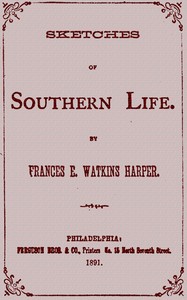
Sketches of Southern life — Edition Insights
(0 User reviews)
1871
Project Gutenberg
2022
Not confirmed
African Americans -- Poetry; Southern States -- Poetry
Readers of public-domain and historical texts
Project Gutenberg digital edition
en
Edition facts
Words
12,551
Reading time
55 min
Text sections
17
The catalog record for Sketches of Southern life — Edition Insights provides practical reading context through 12,551 words, 55 min estimated reading time, and 17 detected text sections.
The text analysis averages about 23.1 words per sentence, while the detected sections provide another way to judge how the source is divided.
Project Gutenberg metadata also associates the work with “African Americans -- Poetry,” connecting these edition facts with the source record’s subject description.
Source:
Project Gutenberg record #69249
Frances E. W. Harper's 1891 poetry collection uses first-person voices of formerly enslaved people to recount loss, faith, and resilience, contrasting rural poverty with urban wealth and spiritual longing with material dissatisfaction.
Editorial Edition Score
4.7/5
★★★★★
★★★★★
Calculated from edition completeness, EPUB availability, text structure and catalogue metadata. Not a user rating.
How this score is calculated
- Description quality20 pts
- Title & short description10 pts
- Source metadata20 pts
- Text length15 pts
- Chapters / structure15 pts
- EPUB file integrity20 pts
Total of 100 points, scaled to a 2.5-5.0 range. Editions with an empty description or a missing EPUB file are not scored.
Edition quality
Read the Text
He just stood up and cried.
But the worst fooled man I ever saw, Was when poor David Rand Sold out for flour and sugar; The sugar was mixed with sand.
I’ll tell you how the thing got out; His wife had company, And she thought the sand was sugar, And served it up for tea.
When David sipped and sipped the tea, Somehow it didn’t taste right; I guess when he found he was sipping sand, He was mad enough to fight.
The sugar looked so nice and white— It was spread some inches deep— But underneath was a lot of sand; Such sugar is mighty cheap.
You’d laughed to seen Lucinda Grange Upon her husband’s track; When he sold his vote for rations She made him take ’em back.
Day after day did Milly Green Just follow after Joe, And told him if he voted wrong To take his rags and go.
I think that Curnel Johnson said His side had won the day, Had not we women radicals Just got right in the way.
And yet I would not have you think That all our men are shabby; But ’tis said in every flock of sheep There will be one that’s scabby.
I’ve heard, before election came They tried to buy John Slade; But he gave them all to understand That he wasn’t in that trade.
And we’ve got lots of other men Who rally round the cause, And go for holding up the hands That gave us equal laws.
Who know their freedom cost too much Of blood and pain and treasure, For them to fool away their votes For profit or for pleasure.
AUNT CHLOE’S POLITICS.
Of course, I don’t know very much About these politics, But I think that some who run ’em, Do mighty ugly tricks.
I’ve seen ’em honey-fugle round, And talk so awful sweet, That you’d think them full of kindness, As an egg is full of meat.
Now I don’t believe in looking Honest people in the face, And saying when you’re doing wrong, That “I haven’t sold my race.”
When we want to school our children, If the money isn’t there, Whether black or white have took it, The loss we all must share.
And this buying up each other Is something worse than mean, Though I thinks a heap of voting, I go for voting clean.
Very soon the Yankee teachers Came down and set up school; But, oh! how the Rebs did hate it,— It was agin’ their rule.
Our masters always tried to hide Book learning from our eyes; Knowledge didn’t agree with slavery— ’Twould make us all too wise.
But some of us would try to steal A little from the book, And put the words together, And learn by hook or crook.
I remember Uncle Caldwell, Who took pot-liquor fat And greased the pages of his book, And hid it in his hat.
And had his master ever seen The leaves upon his head, He’d have thought them greasy papers, But nothing to be read.
And there was Mr. Turner’s Ben, Who heard the children spell, And picked the words right up by heart, And learned to read ’em well.
Well, the Northern folks kept sending The Yankee teachers down; And they stood right up and helped us, Though Rebs did sneer and frown.
And, I longed to read my Bible, For precious words it said; But when I begun to learn it, Folks just shook their heads,
And said there is no use trying, Oh! Chloe, you’re too late; But as I was rising sixty, I had no time to wait.
So I got a pair of glasses, And straight to work I went, And never stopped till I could read The hymns and Testament.
Then I got a little cabin A place to call my own— And I felt as independent As the queen upon her throne.
Uncle Jacob often told us, Since freedom blessed our race We ought all to come together And build a meeting place.
So we pinched, and scraped, and spared, A little here and there: Though our wages was but scanty, The church did get a share.
And, when the house was finished, Uncle Jacob came to pray; He was looking mighty feeble, And his head was awful gray.
But his voice rang like a trumpet; His eyes looked bright and young; And it seemed a mighty power Was resting on his tongue.
And he gave us all his blessing— ’Twas parting words he said, For soon we got the message The dear old man was dead.
Frances Ellen Watkins Harper’s Sketches of Southern Life (1891) opens with Aunt Chloe’s wrenching first-person account of her children being sold away. The poem’s plain, ballad-like stanzas—‘I remember, well remember, / That dark and dreadful day’—establish a voice that is intimate and direct, grounded in specific domestic details: the whisper from cousin Milly, the mistress crying in the great house, the lawyer come to ‘’ministrate’ the debts of the dead master. Harper does not narrate from a distance; she lets Chloe speak her own grief, her body collapsing at the door, her slow wasting ‘to a shadow.’ The collection sustains this pattern of giving voice to those often silenced, weaving together personal testimony and communal memory across seventeen poems.
Loss and the Body’s Memory
In ‘Aunt Chloe,’ Harper renders grief through physical collapse: ‘I rose right up to meet them, / But I fell upon the floor.’ The body registers what language cannot fully contain. Chloe’s wasting—‘I turned to skin and bone’—becomes a visible record of a sorrow nursed ‘all alone.’ Later poems in the collection continue this attention to embodied experience, whether in the exhaustion of labor or the sudden relief of prayer. Harper avoids abstract lament; instead, she anchors emotion in concrete, bodily reactions: a bullet-like shock, a heart-string breaking, a poultice spread on pain. These images give the reader a felt sense of loss that is both individual and representative of a larger historical trauma.
Voices of Faith and Counsel
Chloe’s turn toward faith comes through the words of Uncle Jacob, who tells her to take her burden ‘right unto the mercy-seat.’ His counsel is practical, not doctrinal: ‘I takes all my troubles, Chloe, / Right unto the mercy-seat.’ The poem presents prayer as a physical act of release—the heavy burden rolling ‘like a stone away.’ Hope arrives as a whispered promise: ‘You will see your boys again.’ Harper does not resolve the injustice; instead, she shows how faith functions as a sustaining force within a community that has learned to wait for justice ‘in the kingdom, / If you do not get it here.’ This tension between earthly suffering and heavenly hope runs through several poems, offering a nuanced portrait of religious consolation without erasing the pain that makes it necessary.
Wealth, Fame, and the Unquiet Soul
The later excerpt shifts to a third-person allegory featuring Shalmanezer, a figure who samples Wealth and Pleasure but finds them hollow. Harper describes his restlessness with a sharp, almost satirical eye: velvet carpets, golden lamps, beds of down—yet he sighs ‘amid the fairest scenes.’ The prose-poem contrasts the opulent home with the factories left behind, and introduces Peace accompanied by Self-Denial, whom Shalmanezer ‘utterly and bitterly’ hates. This section departs from the earlier dialect poems in both form and tone, using a more ornate, biblical cadence. The juxtaposition suggests that Harper’s ‘sketches’ are not confined to one register: she moves between the intimate grief of Chloe and the philosophical discontent of a wealthy man, testing different voices and settings to examine what satisfies—or fails to satisfy—the human heart.
Readers will find that Sketches of Southern Life resists easy categorization. It is neither a straightforward narrative nor a collection of discrete lyrics; rather, it moves between first-person testimony, allegorical prose, and homiletic reflection. Pay attention to shifts in voice and form—from Chloe’s dialect to Shalmanezer’s ornate speech—as Harper experiments with how different speakers articulate loss, desire, and hope. The poems reward slow reading, especially for the way small details (a lawyer’s visit, a whispered promise, a mountain crowned with snow) carry emotional and thematic weight far beyond their literal description.
That rainy afternoon, Harper’s voices lingered—loss braided with such quiet hope. Later, idly shelving books, I pulled down Prince Ragnal, and other holiday verses — A Reader’s Guide, and found the same strange tenderness, a different season, same gentle ache beneath the cheer. Some afternoons simply turn on such small accidents.
There are no reviews for this eBook.
There are no comments for this eBook.
Reader reflection
Your personal reading reflection
Build a private reading journal entry for this title.
Your progress
0
/
10
2
Was reading this book enjoyable?
3
How likely are you to recommend this book?
4
How demanding did the text feel?
5
Did the book meet your expectations?
6
How useful did the reading feel?
7
How strong was your personal connection to the text?
8
What was its emotional impact?
9
Which lesson or insight stayed with you?
10