1

Michael Robartes and the dancer — Text and Context
(0 User reviews)
2525
Project Gutenberg
2024
Not confirmed
English poetry -- Irish authors
Readers of public-domain and historical texts
Project Gutenberg digital edition
en
Edition facts
Words
8,974
Reading time
40 min
Text sections
1
For Michael Robartes and the dancer — Text and Context, the stored edition analysis reports 8,974 words, 40 min estimated reading time, and 1 detected text section.
The text analysis averages about 28.2 words per sentence, while the detected sections provide another way to judge how the source is divided.
Project Gutenberg metadata also associates the work with “English poetry -- Irish authors,” connecting these edition facts with the source record’s subject description.
Source:
Project Gutenberg record #72987
Yeats's 1921 collection blends dialogue poems, political elegies, and occult philosophy. The title poem debates women's education, while 'Easter, 1916' and 'The Second Coming' appear alongside notes on Robartes's esoteric system. Cataloged as English poetry by an Irish author, the work's prose preface and notes reveal Yeats's struggle to integrate philosophy into lyric verse.
Editorial Edition Score
4.3/5
★★★★★
★★★★★
Calculated from edition completeness, EPUB availability, text structure and catalogue metadata. Not a user rating.
How this score is calculated
- Description quality20 pts
- Title & short description10 pts
- Source metadata20 pts
- Text length15 pts
- Chapters / structure15 pts
- EPUB file integrity20 pts
Total of 100 points, scaled to a 2.5-5.0 range. Editions with an empty description or a missing EPUB file are not scored.
Edition quality
Read the Text
r a gibe To please a companion Around the fire at the club, Being certain that they and I But lived where motley is worn: All changed, changed utterly: A terrible beauty is born.
That woman’s days were spent In ignorant good will, Her nights in argument Until her voice grew shrill. What voice more sweet than hers When young and beautiful, She rode to harriers? This man had kept a school And rode our winged horse. This other his helper and friend Was coming into his force; He might have won fame in the end, So sensitive his nature seemed, So daring and sweet his thought. This other man I had dreamed A drunken, vain-glorious lout. He had done most bitter wrong To some who are near my heart, Yet I number him in the song; He, too, has resigned his part In the casual comedy; He, too, has been changed in his turn, Transformed utterly: A terrible beauty is born.
Hearts with one purpose alone Through summer and winter seem Enchanted to a stone To trouble the living stream. The horse that comes from the road. The rider, the birds that range From cloud to tumbling cloud, Minute by minute change; A shadow of cloud on the stream Changes minute by minute; A horse-hoof slides on the brim, And a horse plashes within it Where long-legged moor-hens dive, And hens to moor-cocks call. Minute by minute they live: The stone’s in the midst of all.
Too long a sacrifice Can make a stone of the heart. O when may it suffice? That is heaven’s part, our part To murmur name upon name. As a mother names her child When sleep at last has come On limbs that had run wild. What is it but nightfall? No, no, not night but death; Was it needless death after all? For England may keep faith For all that is done and said. We know their dream; enough To know they dreamed and are dead. And what if excess of love Bewildered them till they died? I write it out in a verse-- MacDonagh and MacBride And Connolly and Pearse Now and in time to be, Wherever green is worn. Are changed, changed utterly: A terrible beauty is born.
September 25th, 1916.
O but we talked at large before The sixteen men were shot, But who can talk of give and take, What should be and what not? While those dead men are loitering there To stir the boiling pot.
You say that we should still the land Till Germany’s overcome; But who is there to argue that Now Pearse is deaf and dumb? And is their logic to outweigh MacDonagh’s bony thumb?
How could you dream they’d listen That have an ear alone For those new comrades they have found Lord Edward and Wolfe Tone, Or meddle with our give and take That converse bone to bone.
“O words are lightly spoken” Said Pearse to Connolly, “Maybe a breath of politic words Has withered our Rose Tree; Or maybe but a wind that blows Across the bitter sea.”
“It needs to be but watered,” James Connolly replied, “To make the green come out again And spread on every side, And shake the blossom from the bud To be the garden’s pride.”
“But where can we draw water” Said Pearse to Connolly, “When all the wells are parched away? O plain as plain can be There’s nothing but our own red blood Can make a right Rose Tree.”
ON A POLITICAL PRISONER
She that but little patience knew, From childhood on, had now so much A grey gull lost its fear and flew Down to her cell and there alit, And there endured her fingers touch And from her fingers ate its bit.
Did she in touching that lone wing Recall the years before her mind Became a bitter, an abstract thing, Her thought some popular enmity: Blind and leader of the blind Drinking the foul ditch where they lie?
When long ago I saw her ride Under Ben Bulban to the meet, The beauty of her country-side With all youth’s lonely wildness stirred, She seemed to have grown clean and sweet Like any rock-bred, sea-borne bird:
Sea-borne, or balanced on the air When first it sprang out of the nest Upon some lofty rock to stare Upon the cloudy canopy, While under its storm-beaten breast Cried out the hollows of the sea.
THE LEADERS OF THE CROWD
The title poem of W. B. Yeats's Michael Robartes and the Dancer opens with a dramatic dialogue: a male speaker dismisses opinion as worthless, while a woman questions whether she may attend college. The poem's knight-and-dragon imagery—the dragon as the lady's thought—immediately signals Yeats's characteristic fusion of romantic symbolism with intellectual argument. This collection, published by the Cuala Press in 1920, contains twenty-one poems and a prose preface in which Yeats acknowledges the difficulty of keeping philosophy out of his work. The catalog entry classifies it as English poetry by an Irish author, but the poems themselves range from political elegies for the Easter Rising to esoteric meditations on history and the soul.
Dialogue as Argument
The title poem is structured as a back-and-forth between a man and a woman, a form Yeats uses to stage conflicting views on knowledge, beauty, and love. The man insists that a woman's worth is what her looking-glass can show, while she asks to "go pluck Athena by the hair." The poem's final lines—"And may the devil take the rest"—leave the debate unresolved. This dialogic method recurs in "Solomon and the Witch," where a couple's love is measured against cosmic order. Yeats's preface notes that he came into possession of Michael Robartes's exposition of the Speculum Angelorum et Hominum after the first few poems, and that the excitement of editing made it impossible to keep philosophy out. The dialogue form thus becomes a vehicle for testing ideas, not settling them.
Political Elegies and Their Restraint
"Easter, 1916," "Sixteen Dead Men," "The Rose Tree," and "On a Political Prisoner" form a cluster of poems responding to the Easter Rising. Yeats avoids direct narration of events; instead, he focuses on transformation and aftermath. In "Easter, 1916," the refrain "a terrible beauty is born" captures the paradox of martyrdom. "The Rose Tree" imagines a conversation between Patrick Pearse and James Connolly about watering the tree with blood. The poems are notable for their restraint: they do not glorify violence but dwell on the cost. "On a Political Prisoner" addresses a woman imprisoned after the Rising, comparing her to a "long-legged fly upon the stream"—a figure of detached grace. These poems ground Yeats's abstract historical theories in specific, human losses.
Occult Notes and the System
Yeats appends extensive notes to several poems, explaining the esoteric doctrines behind them. The note to "An Image from a Past Life" draws on Robartes's letters and the Judwalis belief in "Over Shadowers"—spiritual forms that influence waking life. Yeats writes that "no lover, no husband has ever met in dreams the true image of wife or mistress," only counterfeits from past lives. The note to "The Second Coming" describes mathematical diagrams from the Speculum: "squares and spheres, cones made up of revolving gyres intersecting each other at various angles." These notes are not afterthoughts but integral to the collection's design. Yeats admits that the thought may be "unintelligible to others," yet he includes them, trusting the reader to grapple with the system alongside the poems.
Readers approaching Michael Robartes and the Dancer should attend to the interplay between poem and note. Yeats does not separate his lyric voice from his philosophical one; the poems often enact the very tensions the notes attempt to resolve. The collection rewards attention to its structure—the ordering of poems, the recurrence of images like the dragon and the gyre, and the way political and esoteric poems sit side by side. Treat the notes not as explanations but as part of the work's fabric.
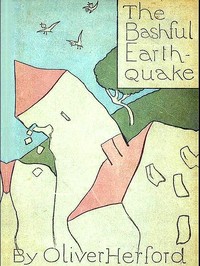
I keep returning to how Yeats weaves his private philosophies into public words—Michael Robartes and the Dancer feels like a conversation half-held in the dark. It reminded me of an old feeling I once got from The Bashful Earthquake, & Other Fables and Verses — Story, Setting & Ideas, where the strange and the tender sit quietly together, not explaining themselves, just lingering after you've put them down.
There are no reviews for this eBook.
There are no comments for this eBook.
Reader reflection
Your personal reading reflection
Build a private reading journal entry for this title.
Your progress
0
/
10
2
What was your overall reaction to the book?
3
Would you recommend this book to another reader?
4
What was the reading difficulty like?
5
Did the story or argument move comfortably?
6
How much did the book move you?
7
Would this book work well in a reading group?
8
Did you relate to its people, ideas, or situations?
9
What is the main idea you are taking away?
10