1

The Works of Horace — Reading Notes
(0 User reviews)
1598
Project Gutenberg
2004
Not confirmed
Latin poetry -- Translations into English; Horace -- Translations into English
Readers of public-domain and historical texts
Project Gutenberg digital edition
en
Edition facts
Words
83,420
Reading time
363 min
Text sections
7
The Works of Horace — Reading Notes can be approached with a clearer sense of reading commitment from its source measurements: 83,420 words, 6 hr 3 min estimated reading time, and 7 detected text sections.
The text analysis averages about 28.1 words per sentence, while the detected sections provide another way to judge how the source is divided.
Project Gutenberg metadata also associates the work with “Latin poetry -- Translations into English,” connecting these edition facts with the source record’s subject description.
Source:
Project Gutenberg record #14020
This edition presents C. Smart's literal prose translation of Horace's Odes, Epodes, Satires, Epistles, and Ars Poetica, revised by T.A. Buckley. The excerpts reveal a translator's voice that prioritizes clarity over poetry, a structure that juxtaposes public and private themes, and recurring motifs of urban annoyance and rural retreat.
Editorial Edition Score
4.7/5
★★★★★
★★★★★
Calculated from edition completeness, EPUB availability, text structure and catalogue metadata. Not a user rating.
How this score is calculated
- Description quality20 pts
- Title & short description10 pts
- Source metadata20 pts
- Text length15 pts
- Chapters / structure15 pts
- EPUB file integrity20 pts
Total of 100 points, scaled to a 2.5-5.0 range. Editions with an empty description or a missing EPUB file are not scored.
Edition quality
Read the Text
Maecenas was to come here, as was the excellent Cocceius. Both sent ambassadors on matters of great importance, having been accustomed to reconcile friends at variance. Here, having got sore eyes, I was obliged to use the black ointment. In the meantime came Maecenas, and Cocceius, and Fonteius Capito along with them, a man of perfect polish, and intimate with Mark Antony, no man more so.
Without regret we passed Fundi, where Aufidius Luscus was praetor, laughing at the honors of that crazy scribe, his praetexta, laticlave, and pan of incense. At our next stage, being weary, we tarry in the city of the Mamurrae, Murena complimenting us with his house, and Capito with his kitchen.
The next day arises, by much the most agreeable to all: for Plotius, and Varius, and Virgil met us at Sinuessa; souls more candid ones than which the world never produced, nor is there a person in the world more bound to them than myself. Oh what embraces, and what transports were there! While I am in my senses, nothing can I prefer to a pleasant friend. The village, which is next adjoining to the bridge of Campania, accommodated us with lodging [at night]; and the public officers with such a quantity of fuel and salt as they are obliged to [by law]. From this place the mules deposited their pack-saddles at Capua betimes [in the morning]. Maecenas goes to play [at tennis]; but I and Virgil to our repose: for to play at tennis is hurtful to weak eyes and feeble constitutions.
From this place the villa of Cocceius, situated above the Caudian inns, which abounds with plenty, receives us. Now, my muse, I beg of you briefly to relate the engagement between the buffoon Sarmentus and Messius Cicirrus; and from what ancestry descended each began the contest. The illustrious race of Messius-Oscan: Sarmentus's mistress is still alive. Sprung from such families as these, they came to the combat. First, Sarmentus: "I pronounce thee to have the look of a mad horse." We laugh; and Messius himself [says], "I accept your challenge:" and wags his head. "O!" cries he, "if the horn were not cut off your forehead, what would you not do; since, maimed as you are, you bully at such a rate?" For a foul scar has disgraced the left part of Messius's bristly forehead. Cutting many jokes upon his Campanian disease, and upon his face, he desired him to exhibit Polyphemus's dance: that he had no occasion for a mask, or the tragic buskins. Cicirrus [retorted] largely to these: he asked, whether he had consecrated his chain to the household gods according to his vow; though he was a scribe, [he told him] his mistress's property in him was not the less. Lastly, he asked, how he ever came to run away; such a lank meager fellow, for whom a pound of corn [a-day] would be ample. We were so diverted, that we continued that supper to an unusual length.
Hence we proceed straight on for Beneventum; where the bustling landlord almost burned himself, in roasting some lean thrushes: for, the fire falling through the old kitchen [floor], the spreading flame made a great progress toward the highest part of the roof. Then you might have seen the hungry guests and frightened slaves snatching their supper out [of the flames], and everybody endeavoring to extinguish the fire.
After this Apulia began to discover to me her well-known mountains, which the Atabulus scorches [with his blasts]: and through which we should never have crept, unless the neighboring village of Trivicus had received us, not without a smoke that brought tears into our eyes; occasioned by a hearth's burning some green boughs with the leaves upon them. Here, like a great fool as I was, I wait till midnight for a deceitful mistress; sleep, however, overcomes me while meditating love; and disagreeable dreams make me ashamed of myself and every thing about me.
Hence we were bowled away in chaises twenty-four miles, intending to stop at a little town, which one cannot name in a verse, but it is easily enough known by description. For water is sold here, though the worst in the world; but their bread is exceeding fine, inasmuch that the weary traveler is used to carry it willingly on his shoulders; for [the bread] at Canusium is gritty; a pitcher of water is worth no more [than it is here]: which place was formerly built by the valiant Diomedes. Here Varius departs dejected from his weeping friends.
The Works of Horace, as rendered by C. Smart and revised by T.A. Buckley, offers a literal English prose translation of the Roman poet's major works. The excerpts show a translator who prioritizes semantic accuracy over poetic form, producing sentences like "Maecenas, descended from royal ancestors, O both my protection and my darling honor!" that preserve the original's address but flatten its lyricism. This edition includes the Odes, Epodes, Satires, Epistles, and the Ars Poetica, each introduced by a table of contents. The translation's literalness makes Horace's rhetorical structures and cultural references visible, even as it sacrifices the Latin's metrical effects.
A Translator's Literal Strategy
Smart's translation consistently opts for word-for-word fidelity. In Ode I.2, "the grievous age of Pyrrha" renders a mythological reference without elaboration, while "the fishy race were entangled in the elm top" preserves the image but not the poetry. This approach makes Horace's allusions accessible to readers without Latin, but it also produces awkward English: "the goal nicely avoided by the glowing wheels" requires the reader to infer the chariot race context. The revision by Buckley likely aimed to smooth such passages, but the excerpts still show a text that functions as a crib rather than a literary translation.
Urban Annoyance and Rural Longing
Satire IX provides a vivid example of Horace's comic voice. The speaker is trapped by a loquacious acquaintance on the Via Sacra, and the translation captures the escalating frustration: "I hang down my ears like an ass of surly disposition, when a heavier load than ordinary is put upon his back." The episode ends with the bore forcing the speaker to accompany him to court. This satire contrasts sharply with the Odes' idealized rural scenes, such as the man "stretched under the green arbute" or "at the placid head of some sacred stream." The juxtaposition suggests a tension between city and country that runs through Horace's work.
Recurring Motifs: Gods, Patrons, and Poetic Identity
Horace frequently invokes divine and patron figures. In Ode I.1, he addresses Maecenas as "both my protection and my darling honor," and later claims "Ivy, the reward of learned brows, equals me with the gods above." The translation preserves these hierarchical relationships: the poet is dependent on patrons yet aspires to divine status through his art. The excerpts also show Horace's self-awareness as a lyric poet, as when he declares "if you rank me among the lyric poets, I shall tower to the stars." This blend of humility and ambition is a consistent thread.
Readers approaching this edition should treat it as a reference translation rather than a poetic rendition. The literal prose allows close study of Horace's arguments, allusions, and structural choices, but it does not convey the original's rhythm or wit. For those interested in the poet's social commentary, the Satires and Epistles offer the most direct access; the Odes require more effort to appreciate through this plain style. Comparing passages with a more literary translation may illuminate what is gained and lost in Smart's approach.
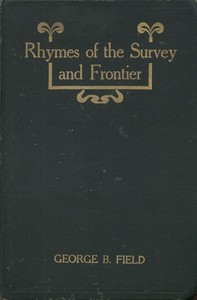
That rainy afternoon, Horace’s grumbling about city noise and longing for his farm felt like a quiet conversation. Buckley’s plain prose let the weariness through, and somehow it nudged me toward a different kind of solitude, one measured in surveyor’s chains. I found myself wandering into Rhymes of the Survey and Frontier — Inside the Classic, where the open land speaks in its own tired, honest rhythm.
There are no reviews for this eBook.
There are no comments for this eBook.
Reader reflection
What did you think of this book?
Answer a few questions and save a private reflection on this device.
Your progress
0
/
10
2
How much did you enjoy the reading experience?
3
Would you pass this book on to a friend?
4
Did the language feel accessible?
5
Did the story or argument move comfortably?
6
Is this a title worth rereading?
7
Did anything about the book feel genuinely new?
8
How understandable was the text?
9
What changed or sharpened your thinking?
10