1

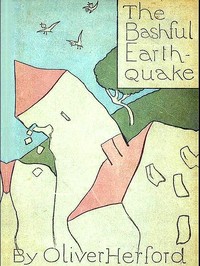
The Bashful Earthquake, & Other Fables and Verses — Story, Setting & Ideas
(0 User reviews)
1613
Project Gutenberg
2018
Not confirmed
Humorous poetry, American
Readers of public-domain and historical texts
Project Gutenberg digital edition
en
Edition facts
Words
16,132
Reading time
71 min
Text sections
28
The source record for The Bashful Earthquake, & Other Fables and Verses — Story, Setting & Ideas measures this digital text at 16,132 words, 1 hr 11 min estimated reading time, and 28 detected text sections.
The text analysis averages about 19.0 words per sentence, while the detected sections provide another way to judge how the source is divided.
Project Gutenberg metadata also associates the work with “Humorous poetry, American,” connecting these edition facts with the source record’s subject description.
Source:
Project Gutenberg record #56765
Oliver Herford's 1898 collection of fables and verses uses whimsical narratives and recurring images of animals, natural phenomena, and fairy-tale figures to explore human foibles, often with a satirical twist. The structure alternates between poems and prose fables, with movement between scenes frequently involving abrupt shifts in scale or perspective.
Editorial Edition Score
4.7/5
★★★★★
★★★★★
Calculated from edition completeness, EPUB availability, text structure and catalogue metadata. Not a user rating.
How this score is calculated
- Description quality20 pts
- Title & short description10 pts
- Source metadata20 pts
- Text length15 pts
- Chapters / structure15 pts
- EPUB file integrity20 pts
Total of 100 points, scaled to a 2.5-5.0 range. Editions with an empty description or a missing EPUB file are not scored.
Edition quality
Read the Text
And, putting his head outside his nest, Cried: “WHO IS IT DARES DISTURB MY REST?”
His voice with rage was a husky squeak. The Earthquake by now had become so weak He’d scarcely strength enough to speak. He even forgot the rules of grammar; All he could do was to feebly stammer: “I’m sorry, but I’m afraid it’s me. Please don’t be angry. I’ll try to be--”
No one will know what he meant to say, For all at once he melted away.
The Dormouse, grumbling, went back to bed, “Oh, bother the Bats!” was all he said.
A scarecrow in a field of corn, A thing of tatters all forlorn, Once felt the influence of Spring And fell in love--a foolish thing, And most particularly so In his case--_for he loved a crow_!
“Alack-a-day! it’s wrong, I know, It’s wrong for me to love a crow; An all-wise man created me To scare the crows away,” cried he; “And though the music of her ‘Caw’ Thrills through and through this heart of straw,
“My passion I must put away And do my duty, come what may! Yet oh, the cruelty of fate! I fear she doth reciprocate My love, for oft at dusk I hear Her in my cornfield hovering near.
“And once I dreamt--oh, vision blest! That she alighted on my breast. ’T is very, very hard, I know, But all-wise man decreed it so.” He cried and flung his arm in air, The very picture of despair.
Poor Scarecrow, if he could but know! Even now his lady-love, the Crow, Sits in a branch, just out of sight, With her good husband, waiting night, To pluck from out his sleeping breast His heart of straw to line her nest.
The politest musician that ever was seen Was Montague Meyerbeer Mendelssohn Green. So extremely polite he would take off his hat Whenever he happened to meet with a cat.
“It’s not that I’m partial to cats,” he’d explain; “Their music to me is unspeakable pain. There’s nothing that causes my flesh so to crawl As when they perform a G-flat caterwaul.
Yet I cannot help feeling--in spite of their din-- When I hear at a concert the first violin Interpret some exquisite thing of my own, If it were not for _cat gut_ I’d never be known.
And so, when I bow as you see to a cat, It is n’t to _her_ that I take off my hat; But to fugues and sonatas that possibly hide Uncomposed in her--well--in her tuneful inside!”
_Gather Kittens while you may, Time brings only Sorrow; And the Kittens of To-day Will be Old Cats To-morrow._
I saw, one day, when times were very good, A newly rich man walking in a wood, Who chanced to meet, all hungry, lean, and sore, The wolf that used to sit outside his door. Forlorn he was, and piteous his plaint. “Help me!” he howled. “With hunger I am faint. It is so long since I have seen a door-- And you are rich, and you have many score. When you’d but one, I sat by it all day; Now you have many, I am turned away. Help me, good sir, once more to find a place. Prosperity now stares me in the face.” The newly rich man, jingling all the while The silver in his pocket, smiled a smile: He saw a way the wolf could be of use.
“Good wolf,” said he, “you’re going to the deuce,-- The dogs, I mean,--and that will never do; I think I’ve found a way to see you through. I too have worries. Ever since I met Prosperity I have been sore beset By begging letters, charities, and cranks, All very short in gold and long in thanks. Now, if you’ll come and sit by my front door From eight o’clock each morning, say, till four, Then every one will think that I am poor, And from their pesterings I’ll be secure. Do you accept?” The wolf exclaimed, “I do!” The rich man smiled; the wolf smiled; _I_ smiled, too, And in my little book made haste to scrawl: “Thus affluence makes niggards of us all!”
One day a Poppy, just in play, Said to a butterfly, “Go ’way, Go ’way, you naughty thing! Oh, my! But you’re a bold bad butterfly!”
Of course ’t was only said in fun, He was a perfect paragon-- In every way a spotless thing (Save for two spots upon his wing).
Oliver Herford's The Bashful Earthquake, & Other Fables and Verses (1898) opens with a poem that imagines Earth's destruction as a child's amusement—a 'pretty shooting star'—immediately establishing the collection's characteristic blend of cosmic scale and playful irony. The volume alternates between verse and prose fables, each built around a central conceit that often inverts expectations: a scarecrow lovesick, a wolf who cannot find a door, a sunflower who insists the sun follows her. Herford's illustrations, which he provided himself, complement the text's whimsical tone.
Recurring Images and Their Reversals
The collection repeatedly deploys images of natural phenomena and animals to stage reversals of perspective. In the title poem, the Earth's fall is reframed as a celestial spectacle. The sunflower in 'The Fatuous Flower' claims the sun pursues her, not the reverse—a comic inversion of heliotropism. The snail dreams of speed; the giraffe remains 'untutored' despite its height. These reversals are not merely clever but point to a consistent interest in deflating human (or animal) pretension. The bee's murmured 'H’m!' after the sunflower's speech becomes a running joke, a tiny sound that carries the weight of skepticism.
Structure: Fable, Verse, and the Frame of the Collection
The book's structure is itself a kind of game. Poems and fables are interleaved without clear demarcation; some pieces, like 'The Bashful Earthquake,' are in verse, while others, like 'The Lovesick Scarecrow,' are prose. The contents page lists 28 items, but the actual number of distinct pieces is higher due to embedded verses within fables. Herford often uses a moral tag—sometimes earnest, sometimes mock-serious—as in 'A Love Story,' where the moral ('Crime, Wickedness, Villany, Vice, / And Sin only misery bring') is undercut by the preceding tale of elopement and petrified parents. This structural playfulness invites readers to question the fable tradition itself.
Movement Between Scenes: Sudden Shifts and Scale Jumps
Herford frequently shifts scenes abruptly, moving from cosmic to domestic, or from the mundane to the fantastical. 'The Bashful Earthquake' leaps from a planetary collision to a child's exclamation. 'Ye Knyghte-Mare' transports readers from a medieval feast to a nightmare of ghostly grandmothers, then back to waking knights who forever avoid mince pie. 'A Love Story' begins with a wizard's son and enchanter's daughter, then jumps to a hired coupé, a cabman enchanted, and a tower built from petrified parents. These jumps are often accompanied by a change in register—from mock-heroic to colloquial, from archaic spelling to modern slang—creating a disorienting but comic effect.
Voice and the Play of Authority
Herford's narratorial voice is consistently ironic, undercutting its own pronouncements. The dedication 'To the Illustrator' (himself) is a mock-grateful acknowledgment. The 'Transcriber’s Note' about spacing in contractions ('is n’t', 'wer n’t') is preserved in the etext, drawing attention to textual quirks. In the fables, the narrator often intervenes with asides: 'The Bee said naught, but murmured, “H’m!”'—a deflation of the sunflower's grandiosity. This self-aware voice prevents the moralizing from becoming heavy-handed; the reader is always aware of the author's wink. The effect is a collection that feels both old-fashioned and slyly modern.
Readers approaching The Bashful Earthquake will find a work that rewards attention to its structural games and verbal play. The poems and fables are best read in sequence, as Herford's shifts in tone and scale build a cumulative comic rhythm. The illustrations—though not reproduced here—are integral to the original book's effect; the text alone retains the wit but loses some visual punch. For those interested in late-Victorian humorous verse, this collection offers a distinctive, self-aware voice that anticipates later nonsense traditions.
I remember how Oliver Herford’s little fables made me smile at our own foolishness, a gentle mirror held up to the heart. There is a similar quiet honesty in Rhymes of the Survey and Frontier — Inside the Classic, though its verses carry dust and distance. Both whisper of human striving, turned just so, like tired friends sharing a bench.
There are no reviews for this eBook.
There are no comments for this eBook.
Reader reflection
Before you leave, reflect on the book
Use these questions to collect your thoughts before moving on.
Your progress
0
/
10
2
Did this book hold your interest?
3
Is this a title you would suggest to others?
4
How easy was the book to follow?
5
How much did the book move you?
6
How personally connected did you feel to the book?
7
Did you gain anything practical from the text?
8
How did the pace of the book feel?
9
Which lesson or insight stayed with you?
10